Commercial Pig Farming Guide

- Description
- Curriculum
- Reviews
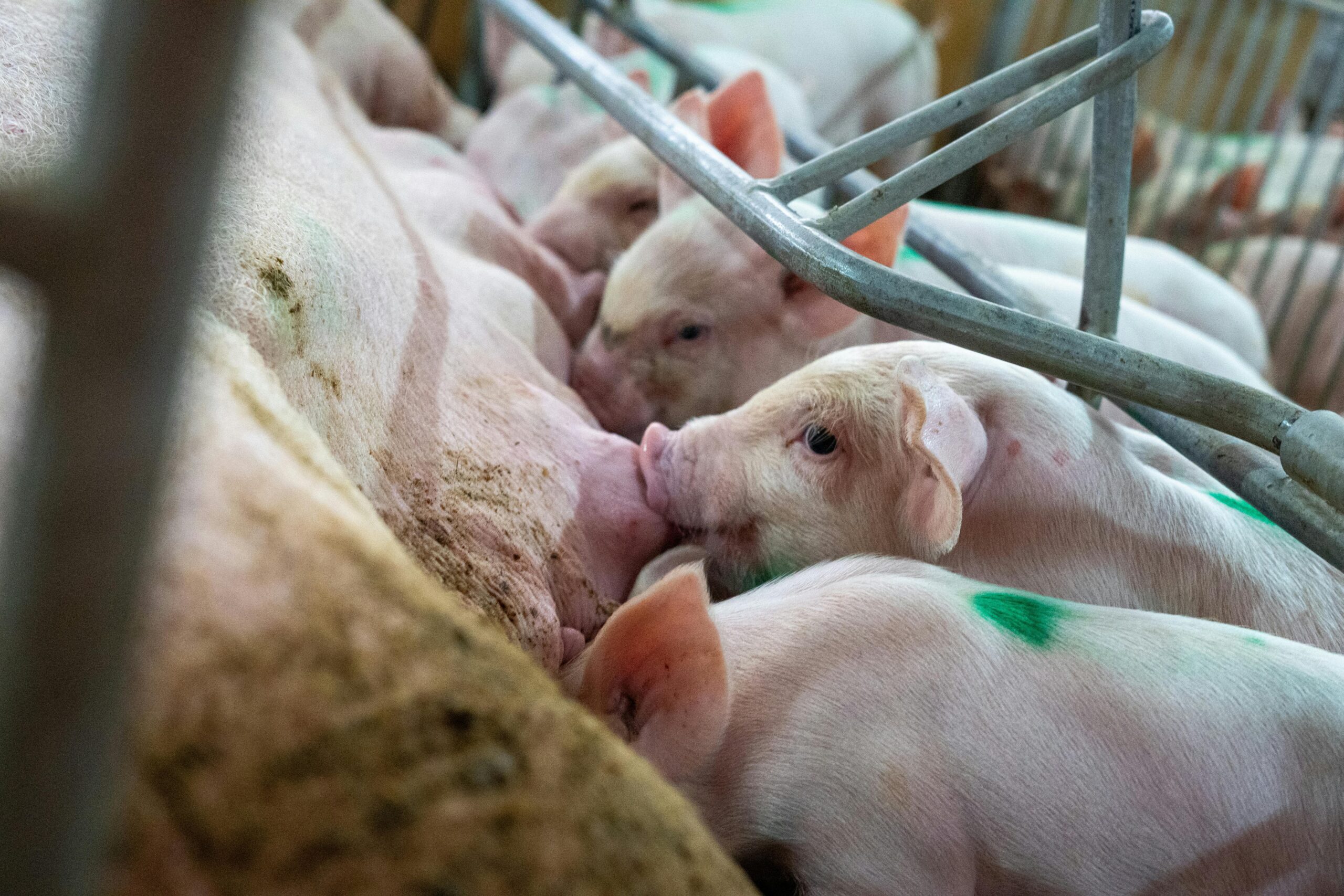
Commercial pig farming presents a powerful opportunity for agripreneurs seeking fast growth cycles, efficient feed conversion, and strong market demand. Pigs grow quickly, reproduce efficiently, and can generate significant returns within relatively short periods when properly managed. However, pig farming is also highly sensitive to management decisions – feeding errors, poor breeding practices, disease outbreaks, and weak cost control can rapidly turn a promising venture into financial strain.
This guide is designed to help aspiring and emerging agripreneurs approach pig farming with a clear, profit-oriented mindset. It focuses on the practical factors that determine success: selecting the right breeds, designing appropriate housing, managing feeding and reproduction, controlling health risks, and planning market strategies. Whether you are starting with a small unit or building toward a commercial operation, the insights shared here will help you minimise avoidable losses, optimise growth, and run pig farming as a predictable, income-generating business.
-
1
 Understanding the Market: Lean Pork Demand vs. Traditional Pork
Before you start, buy a single bag of cement or your first piglet, you must answer one question: Who is going to give me money for this pig? Many farmers make the mistake of raising pigs first and looking for a market later. This often leads to "holding" onto mature pigs for months while they eat away all your profits.
This first step is about "Market-Backwards Planning." We will dive into the different types of buyers in the Kenyan and African markets - from large processors like Farmer’s Choice to local "Pork Joints" - and understand exactly what kind of meat they want. You will learn why a "fat" pig is often a "cheap" pig, and how to position yourself so that buyers are lining up at your gate rather than you begging them to take your stock.
-
2
Selecting Superior Breeds for the Market
In the world of pig farming, your choice of "seed" - the piglets or breeding stock you start with - will determine 50% of your success before you even pour the first bag of feed. Think of it like a marathon: you can be the best coach in the world, but if you enter a tortoise into the race, you will never win.
This step focuses on selecting the right genetics for the African climate and market. We will look at why commercial breeds like the Large White and Landrace are the "gold standard" and, more importantly, how to avoid the "Inbreeding Trap" - a common mistake where farmers buy related pigs from neighbors, leading to slow growth and small litters.
By the end of this section, you will know exactly what to look for when inspecting a pig for purchase, ensuring your farm starts with "marathon runners" rather than "tortoises."
-
3
The 6-Month Cash Flow Map
In pig farming, "Cash is King," but "Cash Flow is the Palace." Many brilliant farmers fail not because their pigs died, but because they ran out of money to buy feed in the fifth month - just weeks away from the finish line.
This step is about the 6-Month Cash Flow Map. Unlike poultry, which might give you meat (broilers) in six weeks, a pig is a medium-term investment. You are pouring money in for 180 days before you get a single shilling out. We will break down the "Money Pit" phase, the "Growth Spike," and how to calculate your breakeven point. We will also discuss the "Emergency Feed Fund" - your secret weapon for when the price of maize bran inevitably jumps.
By the end of this step, you will know exactly how much "fuel" your business needs to reach the "destination" (the slaughterhouse) without stalling.
-
4
Choosing Your Farm Style (Intensive vs. Semi-Intensive)
In this business, your "Farm Style" is the engine under the hood. It determines how fast your pigs grow, how much labor you’ll need, and most importantly, how much of your capital will be tied up in buildings versus feed.
Many agripreneurs rush into building expensive concrete "palaces" and run out of money for pigs, while others leave their pigs to roam, only to lose them to theft or disease.
This step breaks down the two main commercial paths: Intensive (The Fast Track) and Semi-Intensive (The Budget Balancer). We will look at which one fits your specific land size, your available time, and your bank balance. By the end of this section, you’ll be able to choose a system that ensures your pigs reach market weight on time without you going into "housing debt."

-
8
Low-Cost, High-Hygiene Housing Design
Many people think a pig is dirty and happy to live in a swamp of its own waste. This is the biggest lie in pig farming. A pig is naturally a very clean animal; if you give it enough space, it will sleep in one corner and poop in another.
This step is about designing a Pig Fortress that works with the pig’s instincts rather than against them. We aren't building a luxury hotel; we are building a functional, low-cost "meat factory." The goal here is to maximize Comfort (which makes pigs grow faster) and Washability (which keeps them from getting sick). If your housing is poorly designed, you will spend your entire morning scrubbing floors and your entire afternoon calling the vet.
By the end of this step, you will know how to build pens that stay dry, stay cool in the heat, and can be cleaned in minutes rather than hours.
-
9
Turning Waste into Profit
In traditional farming, pig waste is often seen as a "nuisance" - something that smells, attracts flies, and makes neighbors complain. However, a commercial agripreneur looks at a pile of manure and sees black gold.
Pig waste is incredibly rich in nitrogen, phosphorus, and potassium - the three main ingredients in expensive commercial fertilizers. If you manage your waste correctly, you can turn a "disposal problem" into a secondary income stream that can pay for your electricity or even part of your labor costs.
This step focuses on how to collect, process, and sell pig waste without polluting the environment or causing a "stink" in your community. We will explore simple composting, the basics of biogas, and how to package manure for the local "Shamba" market. By the end of this step, you will view "waste" as a product, not a problem.
-
10
The Zero-Tolerance Protocol for African Swine Fever (ASF)
In the pig business, there is one name that strikes fear into the heart of every farmer from Kisumu to Cape Town: African Swine Fever (ASF). Think of ASF as the "Ebola" of pigs. It is a viral monster with no cure, no vaccine, and a 100% death rate. If one pig gets it, your entire herd will likely be dead within a week, and your farm will be quarantined for months.
Many farmers have been wiped out overnight because they allowed a "friendly neighbor" to walk into their pens or fed their pigs contaminated kitchen scraps.
This step is about building an invisible "Shield" around your farm. We will move beyond just "fences" and look at the Zero-Tolerance Protocols that separate professional agripreneurs from those who lose everything. We will cover the "Three Gates" of biosecurity: People, Pigs, and Food. By the end of this step, you will know how to turn your farm into a "Fortress" that no virus can penetrate.
-
11
Water Supply and Sanitation
In the heat of the African sun, many agripreneurs obsess over the "Feed Bill" but ignore the "Water Pipe." This is a fatal mistake. Scientifically, a pig is about 80% water at birth and 50-55% water at market weight.
If you restrict a pig’s water, it will stop eating. If it stops eating, it stops growing. In fact, for every 1kg of dry feed a pig eats, it needs to drink about 2 to 3 liters of water.
This step treats water not just as a drink, but as the most important "nutrient" on the farm. We will cover how to ensure a constant supply of clean, cool water, why "Nipple Drinkers" are a game-changer for local farms, and how to manage sanitation so your water source doesn't become a "disease highway." By the end of this step, you will understand that a "thirsty" pig is a "broke" farmer.
-
15
Heat Detection and Breeding Management
In the commercial piggery, your sows (female pigs) are your "machines," and the piglets they produce are your "products." To run a profitable "Piglet Factory," you cannot leave breeding to chance.
Many farmers wait for a neighbor’s boar to wander by or miss the signs of "heat" entirely, wasting weeks of expensive feed on a sow that isn't pregnant.
This step is about Precision Breeding. We will focus on the biological window called "Heat" (Oestrus) and why timing the "meeting" between the sow and the boar is the difference between a litter of 4 piglets and a litter of 14. We will compare the traditional "Natural Mating" with the modern "Artificial Insemination" (AI) now available in many parts of Kenya and Africa.
By the end of this step, you will know how to spot a sow that is ready for mating and exactly when to make the introduction to ensure a successful pregnancy.
-
16
Gestation Care and Pre-Farrowing Management
Once your sow is successfully mated, she is no longer just a pig; she is a "biological factory" carrying your future profits. The next 114 days (3 months, 3 weeks, and 3 days) are critical.
Many farmers make the mistake of either neglecting the pregnant sow or, strangely, overfeeding her until she is too fat to give birth. This step is about Gestation Management - the art of keeping a sow healthy, calm, and in perfect body condition so she can deliver a large, strong litter.
We will discuss the "gold-system" of feeding (not too much, not too little), the importance of deworming before birth, and why her farrowing pen must be ready well in advance. By the end of this step, you will know how to manage a pregnancy so that your sow arrives at the "finish line" ready to produce 10–14 healthy piglets instead of a struggling, exhausted litter.
-
17
Farrowing Rails and Piglet Survival
This is the "Grand Finale" of the breeding cycle and the most dangerous time on any pig farm. You have invested five months of feed, labor, and money into the sow, but all of that can be lost in a single night.
In pig farming, the leading cause of piglet death isn't disease - it’s crushing. A 200kg sow, exhausted from labor, can easily sit or lie on her 1kg piglets, killing them instantly. Another major killer is chilling; a piglet born into a cold, damp pen will lose its energy and die before it even takes its first drink of milk.
This step is about creating a "Save the Piglet" Zone. We will discuss the life-saving "Farrowing Rails," the "Creep Area" (a nursery for piglets only), and the "First Milk" (Colostrum) that acts as a natural vaccine. By the end of this step, you will be prepared to assist in a birth and ensure that every piglet born alive actually makes it to weaning.
-
18
Piglet Processing (Needling, Iron, and Weaning)
The first few weeks of a piglet’s life are a race to build strength. While the mother provides the milk, the agripreneur must provide the "medical insurance." In the wild, piglets roam in dirt and stay with their mothers for months, but in a commercial "Piglet Factory," we must intervene to prevent injuries and anemia.
This step covers Piglet Processing - a series of simple but mandatory tasks including clipping "needle teeth," administering iron shots, and the big transition called Weaning. Many farmers wonder why their piglets look "pale" or why the sow’s udders are covered in sores; the answer usually lies in skipped processing.
By the end of this step, you will be able to perform these basic vet tasks yourself and manage the stressful weaning period so that your piglets don't lose weight when they leave their mother.
-
19
Starter, Grower and Finisher Rations
Feeding is the single biggest expense in pig farming, often taking up to 70-80% of your total costs. Many farmers go broke because they feed "expensive" food to the wrong pigs or "cheap" food that doesn't make the pigs grow.
In the commercial world, a pig is like a high-performance engine that requires different "fuel" at different stages of its life. A piglet's stomach is tiny and needs high protein to build muscle, while a finishing pig needs energy to put on weight.
This step is about Age-Right Feeding - giving the pig exactly what it needs, when it needs it, to ensure it hits that 80kg market weight in just 6 months. We will break down the four critical feeding phases: Creep, Starter, Grower, and Finisher. By the end of this step, you will understand how to feed for maximum speed and minimum waste, ensuring you aren't "throwing money" into the trough.
-
20
Safe Utilization of Local Feed Substitutes
If you rely 100% on store-bought, commercial bags of feed, your profit margins will be thin - sometimes as low as 10-15%. To truly succeed as an African agripreneur, you must master the art of the "Local Substitute."
Our continent is blessed with "munchies" like maize bran, sweet potato vines, cassava, and omena (small fish) that can slash your feeding costs by up to 40%. However, there is a catch: some of these local foods contain "anti-nutrients" or carry the deadly ASF virus (as we discussed in Housing and Health section).
This step is about identifying which local ingredients are safe, how to prepare them to unlock their energy, and the mandatory sterilization protocols that keep your pigs healthy. By the end of this step, you will know how to turn your local market leftovers and farm by-products into high-grade "Pig Fuel" without risking a disease outbreak.
-
21
Calculating Your Own Low-Cost Rations
Many agripreneurs feel intimidated by the idea of mixing their own feed. They think they need a laboratory or a massive mixing machine to get it right. But here is the secret: Pigs are not mathematicians; they just need a balanced plate. If you can follow a simple recipe using a standard 20-liter bucket, you can save between 30% and 50% on your feed costs compared to buying branded, pre-packed bags.
This step introduces the "Bucket Method" - a practical, ground-level way to mix energy (maize bran), protein (omena/soya), and minerals into a "Magic Ration" that rivals the big manufacturers. We will break down the "Recipe" for different ages and show you how to ensure every bite your pig takes is packed with growth power.
By the end of this step, you will be the "Chef" of your farm, keeping the profit that usually goes to the feed miller in your own pocket.
-
22
Disease Management in Grow-Out Pigs
In a commercial piggery, a sick pig is a "leaking tap" draining your profits. Every day a pig spends battling a disease is a day it isn't gaining weight, and a day you are spending money on expensive medicine instead of feed.
Many farmers make the mistake of waiting for a pig to look "near death" before acting, or they use the wrong drugs for the wrong problems - like using an antibiotic to treat a worm infestation.
This step is about building your Farm Pharmacy and becoming a "Health Detective." We will focus on identifying the "Big Three" of pig ailments: Scours (Diarrhea), Respiratory Issues (Coughing), and Parasites (Worms and Mange). We will also outline a simple, non-negotiable vaccination and deworming calendar that fits the African context.
By the end of this step, you will know how to spot a sick pig before it stops eating and how to stock a basic "First Aid Kit" that can save your herd in the middle of the night when the vet is unavailable.
-
23
Determining Market Weight and Finish
In pig farming, there is a "Magic Window" where your profit is at its highest. If you sell too early, you lose out on the "meat surge" that happens in the final weeks. If you sell too late, the pig starts eating more feed than the weight it’s putting on, and it begins to develop thick layers of back-fat - which most buyers will penalize you for.
This step is about identifying the "Golden Weight" Target, usually between 70kg and 90kg live weight. We will discuss how to tell if a pig is ready for slaughter using the "Heart Girth" tape method (if you don't have a scale), how to assess "finish" or fatness, and why timing your exit is just as important as timing your start.
By the end of this step, you will know exactly when to call the butcher to ensure you get the maximum price per kilogram without wasting a single scoop of feed.
-
24
Transport and Stress Reduction
You have spent six months carefully raising your pigs, but the final journey from the farm gate to the slaughterhouse can destroy all that hard work in just an hour. In our local pig industry, many farmers view transport as a "logistics" problem, but an expert agripreneur views it as a "Quality Control" problem.
Pigs are highly sensitive animals. When they are beaten, chased, or crammed into hot, unventilated trucks, their bodies release a surge of "stress hormones" (like adrenaline). This leads to a chemical reaction in their muscles that results in PSE Pork (Pale, Soft, and Exudative). This meat looks watery, tastes sour, and is often rejected by high-end hotels and processors because it cannot be made into quality bacon or sausages.
This step focuses on humane handling, smart loading, and "cool" travel. By the end of this step, you will know how to get your "bank account" to the market in a way that preserves every cent of its meat quality.
-
25
Linkages to Butcheries and Institutions
In the journey of an agripreneur, the "Middleman" or "Broker" is often the person who makes the most profit while doing the least work. Many farmers in Kenya and across Africa spend six months sweating over feed and disease, only to sell their pigs to a broker at the farm gate for a "flat fee." The broker then drives those pigs two hours away and sells them for double the price.
This step is about Direct Marketing - the strategy of bypassing the middleman and selling your pork directly to the end-user. We will explore how to build relationships with local "Pork Joints," hotels, and butcheries, and how to use modern tools like WhatsApp and social media to find customers. By the end of this step, you will understand that your job isn't finished when the pig is fat; it’s finished when the cash is in your pocket - at the highest possible price.
-
26
Value Addition: Carcass Breakdown and Simple Processing
In the food business, the person who "changes the form" of the product is usually the one who makes the most money. When you sell a live pig, you are a farmer. When you sell a carcass, you are a wholesaler. But when you sell a kilo of sausages, bacon, or smoked ribs, you are a food processor.
Value addition is the "Secret Level" of pig farming that allows you to double or even triple your profit from a single animal. Instead of selling a "whole pig" for a fixed price, you break it down into high-value products that cater to the busy urban middle class.
This step is about the transition from "Pig to Plate." We will look at simple ways to process pork on a small scale, the equipment you need, and how to brand your products so they stand out in a crowded market. By the end of this step, you will see your pig not just as meat, but as a menu of high-profit opportunities.