Profitable Goat Farming Guide

- Description
- Curriculum
- Reviews
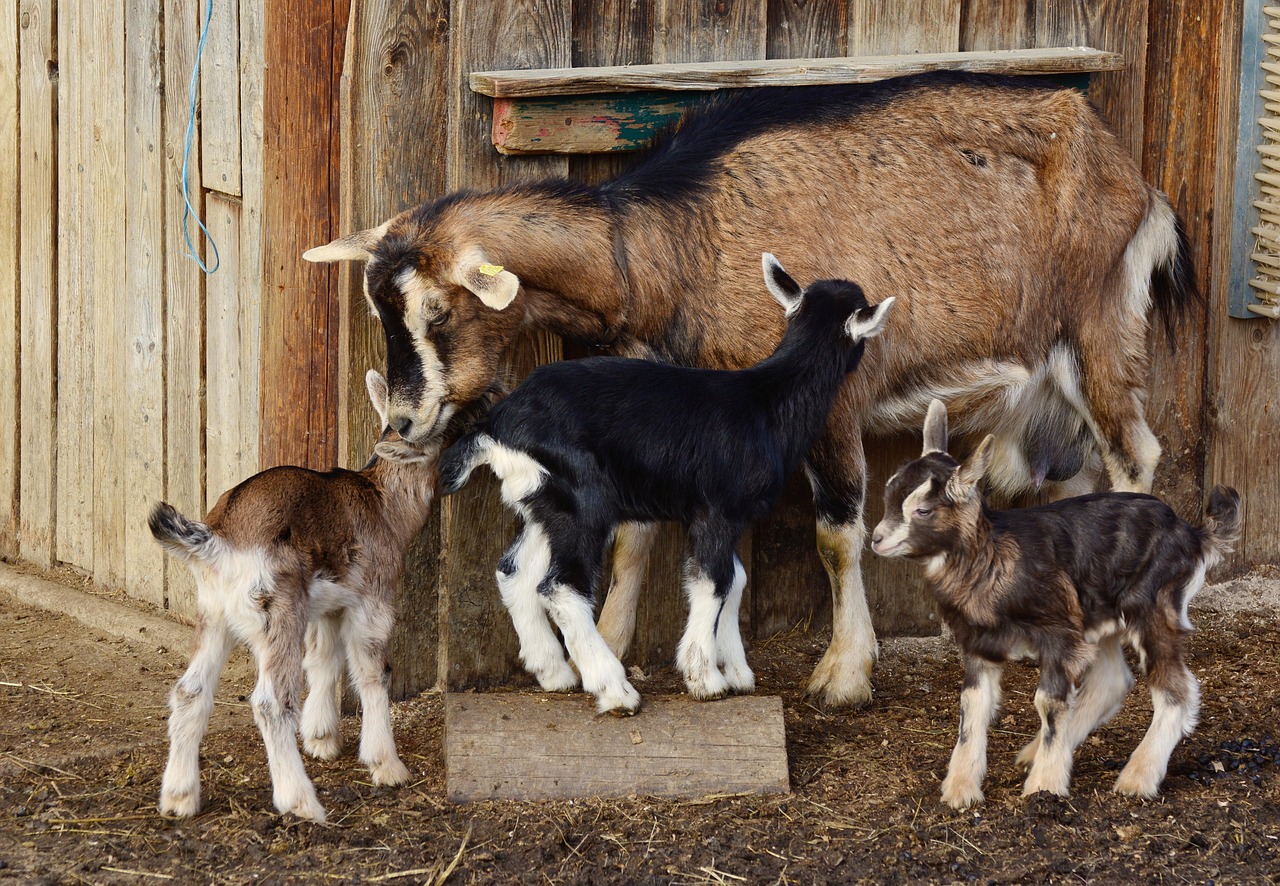
Profitable commercial goat farming offers a practical and resilient agribusiness opportunity for farmers seeking flexibility, manageable input costs, and multiple income streams. Goats adapt well to diverse environments, require relatively modest space compared to larger livestock, and can generate returns through meat, breeding stock, milk, and manure. Yet, despite their reputation for hardiness, successful goat enterprises are not built on survival alone – profitability depends on deliberate breed selection, feeding strategy, health management, and market planning.
This guide is designed to help aspiring and emerging agripreneurs approach goat farming as a structured commercial venture rather than a traditional or casual activity. It focuses on the practical decisions that directly affect growth, reproduction, costs, and revenue – including housing, nutrition, disease prevention, breeding management, and selling strategies. Whether you are starting with a small herd or expanding toward a larger operation, the principles shared here will help you minimise avoidable losses, improve productivity, and run goat farming with the discipline and clarity of a business.
-
1
 Your Choice: Meat, Dairy, or Dual-Purpose
Think of your goats as employees. Before you hire them, you must decide exactly what job you want them to do. Are they here to produce heavy carcasses for the butchery, or are they high-performance milk machines for the dairy market?
This step is the foundation of your entire investment. If you choose a breed that isn't suited for your climate or your market, you will be fighting a losing battle against nature and economics.
This section explains how to match the right goat breed to your specific business goals, whether you are in the dry lands of Turkana, the cool highlands of Limuru, or the semi-arid plains of Kajiado. We will look at the big three options: meat, milk, and the resilient local breeds that survive where others fail.
-
2
System Selection: Browsing vs. Zero-Grazing
In goat farming, your system is the engine that runs your business. It determines how much you spend on feed, how you manage diseases, and how much labor you need every day. There are two main ways to raise goats locally: Extensive Browsing (letting them roam and find their own food) and Intensive Zero-Grazing (keeping them in a shed and bringing food to them).
Choosing the wrong system is like putting a tractor engine in a racing car - it won't work. If you have 50 acres of bushland in Kajiado, keeping goats in a small shed is a waste of money. Conversely, if you have half an acre in a crowded village near Thika, letting them roam will lead to stolen goats or fights with neighbors over ruined crops.
This step breaks down the financial and operational realities of both systems so you can choose the one that maximizes your profit margins while minimizing your risks.
-
3
Financial Projections and Quick Turnaround
Farming is not a hobby; it is a business. To succeed, you must move away from the wait and see attitude and instead use financial goggles to look at your herd. This step is about understanding how to make your money work as hard as your goats do. We focus on two critical financial drivers: Accelerated Kidding and Early Weaning.
Many farmers wait for a goat to give birth once a year. A business-minded farmer knows that with the right feeding and buck management, a healthy doe can produce kids three times in two years. This quick turnaround is what separates a struggling farmer from a profitable agripreneur. However, speed comes with costs - specifically the high cost of medicines and starter feeds.
In this section, we will break down the numbers, show you how to project your cash flow, and identify where your money is most likely to leak if you aren't careful.
-
4
Sourcing Healthy Foundation Stock
Building on a Solid Foundation
In the goat business, your foundation stock - the first group of goats you buy - is the most important investment you will ever make. Think of it like buying seeds for a maize farm; if you plant rotten seeds, no amount of fertilizer or rain will give you a good harvest.
Many aspiring agripreneurs make the mistake of buying goats from the local open-air market because they are cheap. However, these markets are often dumping grounds for sick animals or goats that have failed to conceive.
This step teaches you how to be a detective when buying goats. We will cover how to identify a productive female (doe), how to select a top-tier male (buck), and why the vet must be your best friend during this process.
We will also address the silent killer of productivity: Inbreeding. If you buy a brother and sister and let them mate, their children will be small, weak, and prone to disease. This section ensures you start with a herd that is genetically clean and physically ready to perform.

-
8
Low-Cost, Elevated Housing Design
In the local goat business, the ground is often your enemy. Traditional mud-floor bomas are breeding grounds for pneumonia, foot rot, and internal parasites. If a goat sleeps on a damp floor soaked in its own urine and dung, it breathes in ammonia fumes that destroy its lungs and stands in moisture that rots its hooves.
As an agripreneur, you must view a goat house not just as a shelter from rain, but as a health management tool. The Elevated, Slatted-Floor design is the industry standard for successful commercial farming in Kenya and across Africa. By raising the floor at least 1 meter (about waist-high) off the ground, you allow droppings and urine to fall through the cracks. This keeps the goats dry, clean, and away from the worm cycle.
This step will detail exactly how to build this upstairs home using affordable, locally available materials like timber offcuts, bamboo, or poles, ensuring you don't spend your entire startup capital on a goat palace while still achieving world-class hygiene.
-
9
Goat Nutrition: Browse, Forage, and Supplementation
The biggest mistake a new agripreneur makes is treating a goat like a small cow. While a cow is a grazer (it loves to put its head down and eat grass), a goat is a browser.
In the wild, goats are like giraffes; they prefer to keep their heads up, picking the high-protein leaves, flowers, and barks of shrubs and trees. If you force a goat to eat only grass, it will survive, but it will not thrive, and it will definitely not give you the milk or meat growth you need for a profitable business.
Feeding accounts for nearly 70% of your production costs if you are in a zero-grazing system. To be a successful agripreneur, you must master the art of Nutritional Mathematics - balancing what the goat finds for free (browse) with what you grow (forage) and what you buy (supplements).
This step dives deep into the types of local African plants that act as natural concentrates, how to structure a feeding day, and how to use protein to rocket-charge your kids' growth and your does' milk production.
-
10
Dry Season Feed Strategies
Beating the Brown Season
In the ASALs of Kenya and across the African savannah, the dry season is not just a change in weather; it is a test of your business's survival. For most farmers, this is the season of losses where goats become skeletal, mothers abandon their kids because they have no milk, and many animals die of starvation or opportunistic diseases. This cycle of get fat in the rain, die in the drought is what keeps farmers poor.
As an agripreneur, you must view the dry season as a predictable business event. You know it is coming every year. Therefore, your goal is Feed Conservation.
This step focuses on how to turn the waste of the harvest season into a gold mine for the drought. We will master the techniques of making simple hay, preserving crop residues (like maize stalks), and the survival chemistry of using urea to make poor-quality straw nutritious.
By the end of this section, you will know how to keep your goats gaining weight while your neighbor's goats are struggling to stand.
-
11
Water and Mineral Provision
Many farmers believe that because goats are hardy and can survive without water for a day or two in the desert, they don't need much of it. This is a dangerous myth for an agripreneur. A goat can survive on very little water, but it will not grow meat, it will not produce milk, and it will not get pregnant.
Furthermore, African soils are often hungry - they lack specific minerals like copper, selenium, and zinc. These aren't just fancy scientific words; they are the keys to a goat's engine. Copper prevents swayback and weak kids, while zinc and selenium ensure the mother can conceive quickly after her last birth.
In this step, we will look at how to provide a constant supply of clean water (even in ASALs) and how to use mineral licks as a cheap, high-return investment that ensures your goats remain fertile and resilient against disease.
-
15
Breeding Cycles and Accelerated Kidding
In the goat business, your inventory is the number of healthy kids born each year. If your goats only give birth once a year, you are operating a slow-motion business. To be a true agripreneur, you must master Accelerated Kidding. This is the practice of managing your herd so that each doe produces three crops of kids every two years (the 3-in-2 system) instead of the traditional one crop per year.
This step is about moving away from accidental breeding and toward strategic reproduction. We will discuss how to identify when a doe is ready (heat detection), how to manage your buck so he doesn't become exhausted or lazy, and the nutritional secrets that force a goat's body to produce twins or triplets.
If you get this step right, your herd size will double or triple in a fraction of the time, providing you with a constant stream of animals for sale and a rapidly growing capital of breeding females.
-
16
Gestation, Kidding, and Post-Partum Care
Gestation is the five-month period where your profit is literally growing inside the doe. Many farmers make the mistake of ignoring the mother during this time, thinking she only needs extra care once the kid is born. However, the last 50 days of pregnancy are the most critical; this is when 70% of the kid's body weight is formed. If the mother is neglected now, the kids will be born weak (or dead), and the mother will not have enough milk to support them.
This step focuses on the transition from a pregnant doe to a successful mother. We will cover Lead Feeding to prevent pregnancy toxemia, setting up a Maternity Ward to ensure a hygienic birth, and the immediate steps to take after the kid hits the ground.
As an agripreneur, your goal here is zero mortality. Every kid that dies at birth is a loss of potential revenue of 8,000 to 15,000 KES. We will ensure you are prepared to assist when nature needs a hand and know when to step back.
-
17
Kid Survival: Colostrum and Disbudding
The Golden Hour and the Safety First Rule
The first few days of a kid’s life are the most fragile. As an agripreneur, you must realize that a kid is born with zero immunity. Unlike humans, goats do not pass disease-fighting antibodies to their young through the womb. Instead, all that protection is packed into the mother's first milk, called Colostrum. If a kid does not get this liquid gold within the first few hours, it is essentially a sitting duck for every bacteria in your boma.
This step focuses on ensuring that every kid gets the best start possible through managed suckling.
Furthermore, we will address a management practice that many traditional farmers ignore but commercial agripreneurs swear by: Disbudding (removing the horn buds). While horns look natural, in a commercial farm - especially in zero-grazing or high-density pens - horns are weapons. They lead to ruined udders, eye injuries during fights, and goats getting stuck in wire fences or feeding racks.
This section provides the practical how-to for ensuring survival through nutrition and safety through early horn management.
-
18
Weaning Protocol and Early Growth
Weaning is the process of moving a kid from a liquid diet (milk) to a solid diet (forage and concentrates). Traditionally, weaning happens whenever the mother naturally kicks the kid away. But for the agripreneur, weaning is a calculated business move. If you wean too late, you drain the mother’s body, preventing her from getting pregnant again and slowing down your 3-in-2 kidding cycle. If you wean too early or too abruptly, you cause weaning shock, where the kid stops growing, loses weight, and becomes susceptible to worms.
This step is about mastering the art of the transition. We will learn how to prepare a kid’s stomach (the rumen) to handle grass as early as possible and how to use Creep Feeding to ensure that when the milk stops, the growth doesn't.
Our goal is to have a kid that is fully independent by 90 days (3 months), weighing at least 12–15kg, allowing the mother to return to the buck and start your next round of profit.
-
19
Internal Parasites: Worms (The Biggest Threat)
If there is one thing that can bankrupt a goat agripreneur faster than a drought, it is the internal parasite - specifically, the Barber Pole Worm (Haemonchus contortus).
In the warm, humid environments of many regions, or even in the ASALs after a flash rain, these worms multiply by the millions. They are called Barber Pole worms because they wrap around the goat’s stomach lining and drink its blood, literally draining the life out of your animal from the inside.
Most farmers treat worms by guessing - they deworm every goat every month with the cheapest drug they can find. This is a recipe for disaster. It leads to Drug Resistance, where the worms eventually learn to survive the medicine, leaving you with no way to save your herd. As an agripreneur, you must move from blind deworming to Strategic Parasite Management.
This step teaches you the FAMACHA system - a way to read a goat’s eyes to see if it is being eaten alive - and how to use rotational grazing and targeted treatment to keep your goats healthy without breaking the bank or creating super-worms.
-
20
Disease Prevention: PPR, Foot Rot, and Mange
The Triple Threat to Your Profits
If worms are the invisible thieves that slowly drain your goats, infectious diseases are the armed robbers that can wipe out your entire business in a single weekend. In the Kenyan and broader African context, three major threats stand above the rest: PPR (Goat Plague), Foot Rot, and Mange.
PPR is a viral killer that spreads like wildfire through a village, often leaving a 90% death rate in its wake. Foot Rot, while rarely fatal, is a production killer - a goat that cannot walk cannot eat, and it will quickly waste away. Mange is a skin parasite that turns a beautiful, high-value goat into a scabby animal that no butcher or breeder will touch. As an agripreneur, you cannot afford to wait for symptoms. You must implement a Biosecurity and Vaccination Shield.
This step provides the practical, non-negotiable protocols for preventing these three threats through scheduled vaccinations, hygienic foot care, and external parasite control.
-
21
Hoof and General Health Checks
An expert agripreneur knows the smell and sound of a healthy farm. While vaccinations and deworming are scheduled events, General Health Checks are a daily habit. In the commercial world, waiting for a goat to stop eating before you notice it is sick is a failure. By the time a goat looks sick to an untrained eye, it has likely been suffering for days, losing weight and wasting your expensive feed.
This step focuses on the Routine Observation - the ten minutes you spend every morning looking at your herd with a critical eye. We will focus specifically on Hoof Health, as the feet are the foundation of the goat's mobility, and the 5-Point Health Check, a rapid system used by top livestock managers to audit an animal's condition in under sixty seconds.
Mastering these checks allows you to catch sub-clinical issues - those small problems that haven't become big disasters yet - saving you thousands in vet bills and lost production time.
-
22
Quarantine and Sick Bay Management
The Border Control of Your Farm
In the world of commercial agripreneurship, your farm is a high-security zone. Every time you bring in a new goat or allow a sick animal to stay with the healthy ones, you are taking a massive financial risk. Think of your herd as a biological bank account; one single infected animal is like a virus that can wipe out your entire balance.
Quarantine is the practice of keeping new arrivals separate to ensure they aren't carrying diseases like PPR or contagious abortion. Sick Bay Management is about isolating resident goats that fall ill so they don't turn a single case of pneumonia into a farm-wide disaster. Many small-scale farmers view a separate pen as a waste of space, but for a business-minded farmer, it is the most important insurance policy you own.
This step covers how to design a simple isolation unit, the Gold Standard 30-day quarantine protocol, and the biosecurity habits - like hand washing and foot-baths - that prevent you, the farmer, from being the one who accidentally spreads the disease between pens.
-
23
Hygienic Milking for Dairy Goats
From Milk to Money
Goat milk is a premium product locally, often sold at twice the price of cow milk because of its high digestibility and health benefits for children and the elderly. However, milk is also highly perishable. It is a living liquid that can easily be ruined by bacteria, dirt, or the goaty smell that many consumers dislike.
That goaty smell isn't natural to the milk - it is usually the result of poor hygiene or having a buck (male) too close to the milking area. As an agripreneur, your reputation depends on the cleanliness and shelf life of your product. If your milk spoils in four hours, you have no market. If it stays fresh for days, you have a business.
This step covers the Gold Standard milking routine, the management of the udder to prevent Mastitis, and the rapid cooling protocols that ensure your milk reaches the customer in perfect condition.
-
24
Milk Value Addition: Yoghurt and Cheese
In the dairy business, selling raw milk is selling a commodity. Selling yoghurt or cheese is selling a brand. Value addition is the ultimate shield against fluctuating market prices and spoilage.
If you have a surplus of milk on a Friday and no buyers, that milk might be lost by Sunday. However, if you turn that milk into yoghurt, its shelf life extends to two weeks. If you turn it into a simple soft cheese, you have created a gourmet product that can be sold to high-end hotels or health-conscious urbanites at a significant premium.
Value addition doesn't require a million-shilling factory. It requires a deep understanding of Pasteurization (killing the bad bacteria) and Fermentation (encouraging the good bacteria).
This step will guide you through low-cost, kitchen-based methods for producing high-quality goat yoghurt and Farmer’s Cheese (Chèvre). By mastering these techniques, you stop being a price-taker and start being a price-maker, capturing the profits that usually go to the middlemen and processors.
-
25
Targeting Niche Meat Markets
Selling the Experience, Not Just the Meat
In the meat industry, there is a massive price difference between selling a goat to a local broker and selling a goat for a specific ceremonial or niche market. To a broker at a roadside market, your goat is just kilos of meat to be bought at the lowest possible price. To a family celebrating a wedding, a religious holiday, or a return-from-abroad party, that same goat is the centerpiece of an important event.
As an agripreneur, you must understand the Calender of Demand. The value of a goat is not fixed; it fluctuates based on the lunar calendar (Eid-ul-Adha), the solar calendar (Christmas and Easter), and local cultural cycles (initiation seasons or "Ruracio" dowry negotiations).
By timing your production so your goats reach peak weight exactly when demand is highest, and by selecting breeds that look the part, you can earn a 30% to 50% premium over standard market rates.
-
26
Record Keeping and Profit/Loss Analysis
From Farmer to CEO
This is the most important step in the entire guide. Without records, you aren't running a business; you are running an expensive hobby. You might have a feeling that you are making money because you have cash in your pocket after a sale, but if you haven't tracked the 2,000 KES you spent on dewormers or the 5,000 KES spent on supplementary hay, you might actually be losing money on every goat you sell.
A commercial agripreneur treats the farm like a bank. Every kid born is an asset, every bag of feed is an investment, and every dead goat is a capital loss.
This final step teaches you how to maintain simple, effective records that allow you to calculate your Cost of Production. Once you know exactly how much it costs to produce 1kg of meat or 1 liter of milk, you can set prices that guarantee a profit. We will look at Production Records (the health of the business) and Financial Records (the pulse of the business).