Profitable Bee Keeping Guide

- Description
- Curriculum
- Reviews
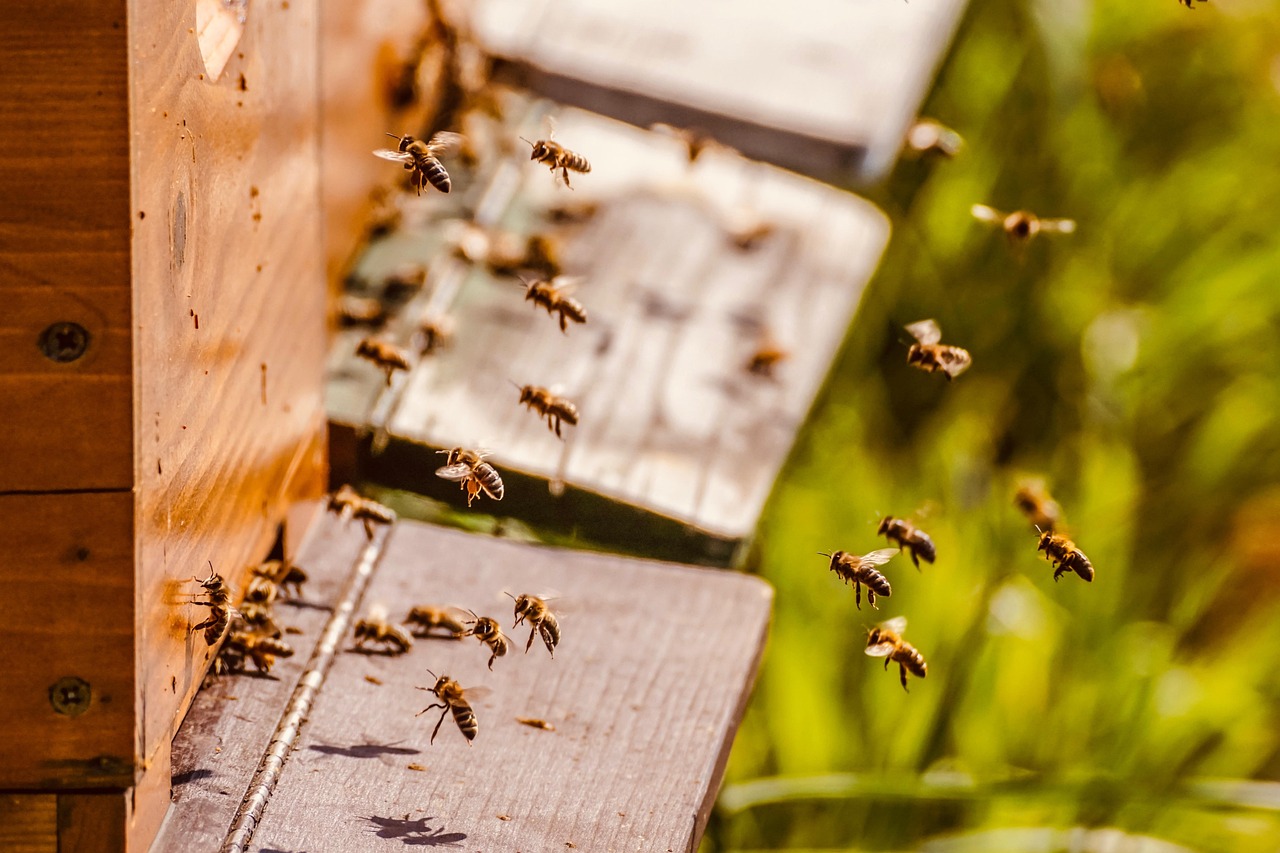
Beekeeping for profit presents a unique and often overlooked agribusiness opportunity that combines low land requirements, relatively modest startup costs, and multiple income streams. Beyond honey production, a well-managed apiary can generate revenue from wax, propolis, pollen, breeding colonies, and pollination services. Beekeeping also fits naturally within mixed farming systems, complementing crop and livestock enterprises without competing for significant space or feed resources. However, profitability in beekeeping is not automatic – poor hive management, weak colony establishment, harvesting mistakes, and limited market planning can significantly reduce returns.
This guide is designed to help aspiring and emerging agripreneurs approach beekeeping as a structured commercial venture rather than a passive or purely traditional practice. It focuses on the practical factors that influence colony health, productivity, and income – including hive selection and placement, colony management, seasonal considerations, harvesting techniques, quality control, and market strategy. Whether you are starting with a few hives or planning a larger honey enterprise, the principles shared here will help you avoid common setbacks, stabilise production, and build a beekeeping venture that contributes meaningful, reliable income.
-
1
 Understanding The African Honeybee: Behavior & ROI
Unlike the docile bees often shown in European documentaries, our local bees - the African Honeybee - are workers in every sense of the word, hardy, fast, and intensely protective of their liquid gold. This section will help you understand the personality of the African Honeybee (Apis mellifera scutellata) and more importantly, why they a may be a superior financial investment compared to traditional livestock like cattle or goats. We will discuss their tendency to defend the hive and their habit of migrating (swarming) against their incredible ability to produce high yields in harsh environments.
By the end of this section, you will see your bees as a biological asset. We will break down the Return on Investment (ROI) by looking at how a single well-managed colony can out-produce other small-scale ventures with a fraction of the labor cost. If you are looking for a venture that works while you sleep, understanding the behavior and the math of the African bee is your first critical hurdle.
-
2
The Pilot Budget & Technology Selection
Many aspiring beekeepers fail because they either buy the cheapest equipment that falls apart in one season or over-invest in high-end technology they don't know how to use. Here, we strip away the technical jargon to look at Capital Expenditure (CapEx) - the money you spend once to get started and how to choose the right hive technology for your specific goals. We will compare the three most common vessels for your bees: the Traditional Log Hive, the Kenya Top Bar Hive (KTBH), and the Langstroth Hive.
Understanding this selection is critical because your choice of hive dictates your labor, your honey quality, and your profit margins. We will also walk through a "3-Hive Pilot Budget." Starting with exactly three hives is a strategic business move; it is small enough to manage as a side hustle but large enough to provide a "control group" to see which location or colony performs best. By the end of this section, you will have a clear shopping list and a realistic understanding of the Kenyan shillings (or your local currency) required to move from an idea to an active apiary.
-
3
Siting for Safety & Security
Selecting the location for your apiary - the place where your hives will work, is a decision that balances biological needs with business risk management. In this step, we move away from the what and focus on the "where." A poorly sited apiary can lead to your "staff" (the bees) attacking neighbors, being stolen by thieves, or being wiped out by a single honey badger in a night.
We will look at the three pillars of a perfect site: Forage and Water, Climate Control, and Risk Mitigation. For an African agripreneur, Safety isn't just about the bees; it's about legal liability and protecting your capital. We will discuss the "Safe Distance" rules to keep you out of trouble with the community and the physical infrastructure needed to defend against the unique predators of our continent. Think of your apiary site as a factory floor; it needs to be accessible for you to work, but secure enough that "unauthorized personnel" (predators and thieves) can't get in. By the end of this section, you will be able to walk onto a piece of land and immediately identify the "Sweet Spot" where bees will thrive and your investment will be safe.
-
4
Protective Gear & Tool Inventory
Working with the African honeybee requires more than just courage; it requires the right "armor." Because our local bees are fast and highly communicative, a single sting can release "alarm pheromones" (a scent like bananas) that tells the rest of the colony to attack. This step focuses on your Protective Gear and Tool Inventory, distinguishing between "Shared Assets" and "Per-Unit Assets." In the business of beekeeping, your gear is a critical investment in your labor productivity. If you are poorly protected, you will work in fear, move too quickly, squash bees, and end up with a chaotic apiary.
In this section, we will detail the essential kit: the full bee suit, the smoker (your most important tool), and the hive tool. We will also look at how to source quality materials locally—because a cheap, thin suit is worse than no suit at all if it gives you a false sense of security. By the end of this step, you will have a professional inventory list that ensures you can walk into any apiary with the confidence of a CEO entering their boardroom, knowing you are fully protected and equipped to manage your "staff" efficiently.
-
5
Sourcing & Baiting Colonies
This is the moment your "factory" comes to life. In the business of beekeeping, "Sourcing" refers to how you acquire your biological assets—the bees. While you can buy established "nucleus" colonies from other farmers, the most cost-effective and common method for the African agripreneur is Baiting. This involves "tricking" a wild swarm or a migrating colony into choosing your hive as their permanent home. Because the African honeybee is highly mobile and frequently swarms, your hives are essentially "real estate" waiting for a tenant.
In this step, we will discuss the art of "baiting" using local scents like propolis, beeswax, and lemongrass, and compare this to the faster, but more expensive, method of buying a "nuclei" (a small, started colony). We will also cover the critical "transfer" phase—moving a swarm from a bait trap into a permanent Langstroth or KTBH hive. Doing this incorrectly causes "Startup Shock," leading the bees to abscond (leave), which results in a 100% loss of your "staff" before they’ve even started working. By the end of this section, you will know how to make your hives the most attractive "apartments" in the area and how to ensure your bees stay for the long haul.

-
9
Inspection Mastery & Data Tracking
Once your hive is populated with bees, you transition from an installer to a manager. Many hobbyists make the mistake of leaving their bees alone until they want honey, but a professional agripreneur knows that Inspection Mastery is the difference between a thriving business and an empty box. In this step, we treat hive inspections as "audits." You aren't just looking at bees; you are checking the health of your primary asset (the Queen), the productivity of your workforce (the Brood), and the status of your inventory (Honey and Pollen).
Parallel to physical inspections is Data Tracking. In the local beekeeping context, where seasons can be unpredictable, your Apiary Logbook is your most valuable management tool. It allows you to move away from guesswork and toward data-driven decisions. By recording which hives are Top Performers, you can identify the best genetics for future expansion. This section will teach you how to "read" a hive without causing a riot and how to maintain a simple, robust record-keeping system that turns a collection of boxes into a scalable commercial enterprise.
-
10
Managing Swarming & Absconding
In the world of beekeeping, "Asset Retention" is everything. Imagine owning a shop where, one morning, half your staff and the manager simply walk out the door to start a new business elsewhere—that is Swarming. Or worse, imagine the entire staff closes the shop and disappears because they don't like the working conditions—that is Absconding. For the African agripreneur, these two behaviors are the biggest threats to consistent honey production. However, they are also your biggest opportunities for growth if managed correctly.
This step focuses on distinguishing between these two biological events. Swarming is a sign of success—your hive is so full of bees and honey that it needs to reproduce. Absconding is a sign of stress—the bees are unhappy with pests, heat, or lack of food. We will cover how to spot "Queen Cells" (the warning sign of a swarm) and how to perform a "Colony Division" to double your hives for free. We will also look at the "Stay-Put" checklist to ensure your bees don't abandon their "factory" during the dry season. By mastering this step, you stop being a victim of bee migration and start becoming a manager of colony expansion.
-
11
The Honey Flow & Dearth Feeding
In African beekeeping, your business does not operate on a flat line; it operates in "peaks" and "valleys." The Honey Flow is your peak season—this is when the rains have come, the flowers (like Acacia, Eucalyptus, or Sunflower) are bursting with nectar, and your "workforce" is working 24/7 to fill your "warehouse." Conversely, the Dearth is the valley—the dry, dusty season where flowers wither, and the bees have nothing to collect. For an agripreneur, managing these two extremes is a matter of Operating Expenses (OpEx) and Asset Protection.
This step teaches you how to identify the signs of a coming "Flow" so you can expand your hive capacity in time to catch the wealth. We will also dive deep into the controversial but necessary practice of Supplemental Feeding. In the business of bees, "Dearth Feeding" isn't about making honey from sugar; it is about keeping your "staff" from starving or absconding during the hard times. We will calculate the cost-benefit of a bag of sugar versus the cost of losing an entire colony. By the end of this section, you will be able to read the African seasons like a financial calendar, knowing exactly when to invest in "rations" and when to prepare for the "big harvest."
-
12
Forage Enhancement & Water Systems
In this final step of our Management section, we look at how to stabilize your business by controlling the environment around your "factory." While bees can fly up to 5 kilometers to find food, flying that far is "expensive" in terms of bee energy and time. As an agripreneur, your goal is to create a "Permanent Buffet" right at their doorstep. This is called Forage Enhancement. By planting the right trees and shrubs, you shorten the flight distance, which directly increases your honey yield.
Equally important is the Water Infrastructure. Bees use water not just to drink, but as "air conditioning" to cool the hive. In many parts of Africa, the search for water brings bees into conflict with humans at taps and swimming pools. We will discuss how to build low-cost, "bee-safe" watering points that prevent drowning and keep your neighbors happy. By the end of this step, you will know how to transform a dry plot into a lush, bee-centric ecosystem that ensures your colonies stay strong, productive, and local.
-
16
Wax Moth & Small Hive Beetle
In the beekeeping business, your "inventory" isn't just the honey; it is the wax combs themselves. It takes a colony a massive amount of energy and nectar to build a single comb. The Greater Wax Moth and the Small Hive Beetle (SHB) are the "warehouse thieves" of the apiary. They don't usually attack the bees directly; instead, they destroy the infrastructure. The Wax Moth eats through the combs, leaving a sticky, web-like mess, while the SHB larvae "slime" the honey, making it ferment and become unsellable.
This step focuses on Economic Thresholds—knowing when a colony is strong enough to defend itself and when it is too weak to survive. For an African agripreneur, "Hive Hygiene" is the primary defense. We will discuss how to manage these pests without using expensive or toxic chemicals that would ruin your "Organic" status. We will also look at the "Business of Merging": why it is often more profitable to combine two weak, pest-infested colonies into one strong "powerhouse" rather than trying to save both and losing all your equipment.
-
17
Varroa Mites & Organic Control
While predators like badgers are visible and dramatic, the Varroa Mite (Varroa destructor) is a silent, microscopic "vampire" that can collapse an entire apiary before you even realize it’s there. These mites latch onto the bodies of both adult bees and developing larvae, sucking their "blood" (hemolymph) and spreading crippling viruses. In the African context, our local bees (Apis mellifera scutellata) have shown a remarkable "hygienic behavior," often grooming the mites off each other. However, during times of stress or drought, a Varroa infestation can reach an Economic Threshold where the colony can no longer outbreed the death rate.
As an agripreneur, your goal is to manage Varroa without compromising the "Organic" status of your honey, which is a major selling point in both local health stores and export markets. This step focuses on low-cost, physical detection methods—like the "Sugar Shake Test"—and the use of organic acids or essential oils rather than harsh synthetic chemicals. We will treat Varroa management as a routine "health check" for your workforce. By the end of this section, you will know how to identify these tiny hitchhikers and how to implement a treatment plan that keeps your bees healthy and your honey pure and premium.
-
18
Predator Defense (Ants & Badgers)
In the African bush and even in peri-urban settings, your apiary is a high-value target for "professional" thieves. We aren't just talking about humans; we are talking about two of the most persistent and destructive biological threats: Safari Ants (Dorylus) and the Honey Badger (Mellivora capensis). For an agripreneur, these predators represent a "Total Loss Risk." A colony of safari ants can wipe out and cause the absconding of an entire apiary in a single night, while a honey badger will physically smash your hives to pieces to get to the brood and honey.
This step focuses on Infrastructure Maintenance and physical barriers. Unlike pests that live inside the hive, predators are external forces that require "Engineering Solutions." We will look at how to build "Ant-Proof" stands and "Badger-Proof" hanging systems. This isn't just about animal welfare; it’s about protecting your Capital Expenditure (CapEx). If a badger destroys a KSh 5,000 hive, you lose the equipment, the bees, and the potential honey revenue. By the end of this section, you will know how to "harden" your apiary so that it becomes a fortress that even the most determined predator cannot breach.
-
19
Safety & Aggressiveness Management
In the business of beekeeping, your "staff"—the African honeybee—is your greatest asset, but their defensive nature can also be your greatest legal and social liability. A "defensive" bee is a good worker that protects your honey, but an "aggressive" apiary can lead to livestock deaths, neighbor disputes, or even local government bans on your business. This step is about Risk Management. We move from protecting the bees to protecting the people and animals around them.
Management of aggressiveness is a combination of Timing, Technique, and Genetic Selection. We will discuss how to use "Smoker Fuel Science" to calm a colony and the "Golden Hours" for inspection that minimize community disruption. As an agripreneur, your reputation in the village or town is part of your brand. If your bees are "peaceful neighbors," your business can scale; if they are a menace, your "factory" will be shut down. By the end of this step, you will know how to work with the most "spirited" African colonies while maintaining total safety for yourself and the community.
-
20
Determining Readiness & Yield Estimates
This is the moment of truth for your agribusiness—the transition from management to revenue. In the beekeeping world, harvesting too early is a financial disaster; "unripe" honey has too much water, causing it to ferment and spoil, which can destroy your brand’s reputation. Conversely, waiting too long in a high-predator area increases the risk of theft or "staff" (bees) eating the profits during a sudden dry spell.
In this step, we focus on Quality Control and Yield Estimation. We will move away from guesswork and toward professional metrics, such as the "80% Capping Rule" and the use of a Refractometer—a simple tool that measures moisture content to ensure your honey meets "Export Grade" standards. You will also learn how to calculate "Expected Yields" per hive, which is essential for your cash-flow planning. By the end of this section, you will know exactly when your "liquid gold" is ready for the market and how to predict how many kilograms you’ll be taking to the bank.
-
21
Clean Harvesting & Smoke Control
The moment you begin the harvest, you are no longer just a farmer; you are a food processor. Honey is one of the few natural products that is "ready to eat" the moment it leaves the hive, but it is also a sponge for scents and impurities. The two biggest threats to your honey's market value at this stage are smoke taint and physical contamination. If you use too much smoke, or the wrong kind of fuel, your premium Acacia honey will taste like an old charcoal pit—a defect that cannot be removed and will lead to your product being rejected by high-end buyers.
This step focuses on "Harvest Hygiene" and the professional use of smoke. We will introduce the use of Bee Escapes—simple mechanical tools that allow you to clear bees from your honey boxes without using any smoke at all. We will also cover the "Clean Chain": from the type of buckets you use to the way you handle the combs. By the end of this section, you will be equipped to harvest honey that is as pure and fragrant as the flowers it came from, ensuring you never lose a sale due to "off-flavors" or dirt.
-
22
Extraction Efficiency
In the beekeeping business, extraction is the "refining" stage where your raw harvest is converted into a liquid asset. Your choice of extraction method is a major driver of your Return on Investment (ROI). Many traditional beekeepers use the "smash-and-strain" method, which is low-cost but destroys the honeycomb. For an agripreneur, destroying the comb is like a factory owner tearing down the walls of their building every time they finish a production run; it forces the bees to spend weeks of "labor" and kilograms of nectar just to rebuild the "infrastructure" rather than making more honey.
This step focuses on maximizing efficiency through technology. We will compare the traditional Hand-Press/Squeeze method with the professional Centrifugal Extractor. We will look at how "recycling" your combs can double your harvest frequency and how to achieve the "crystal clear" clarity that premium buyers demand. By the end of this section, you will be able to choose the extraction method that fits your current scale and understand the "multi-stage filtration" process required to move from "muddy" farm honey to "shelf-ready" gold.
-
23
By-Product Recovery (Wax & Propolis)
In a truly profitable agribusiness, there is no such thing as "waste"—only "unrealized revenue." While most beekeepers focus solely on honey, the professional agripreneur looks at the entire output of the hive. Beeswax and Propolis are high-value by-products that often command a higher price per kilogram than honey itself. In the African market, beeswax is in high demand for the textile (Batik), pharmaceutical, and cosmetic industries, while propolis—the "bee glue" used to seal the hive—is prized for its medicinal, anti-fungal, and anti-bacterial properties.
This step focuses on Zero-Waste Production. We will discuss how to recover high-grade wax using the "Solar Wax Melter"—a low-cost, zero-fuel technology perfect for the African sun—and how to properly scrape and store propolis. By diversifying your income streams, you ensure that even in a "poor" honey year, your apiary remains a profitable venture. By the end of this section, you will understand how to process these materials into a "market-ready" state, turning what others throw away into a second and third stream of steady cash.
-
24
Pricing, Labeling, & KEBS/Regulatory
This step marks your transition from a producer to a professional brand owner. In the African honey market, the difference between "farm-gate" prices and "retail shelf" prices is massive—sometimes doubling or tripling your revenue. However, to access those high-value shelves in supermarkets or urban health stores, you must move beyond selling honey in recycled plastic bottles. You must understand Commercial Compliance.
In this section, we focus on the "Business of the Bottle." We will break down Cost-Plus Pricing, ensuring you account for "hidden" costs like hive depreciation and transport. We will also navigate the regulatory landscape, specifically the Kenya Bureau of Standards (KEBS) requirements (or your local equivalent), and the legal necessity of proper labeling. By the end of this step, you will know how to price your product for profit and how to ensure your brand meets the national standards required to sit legally and competitively on any retail shelf in the country.
-
25
Branding & Food-Grade Packaging
In the honey business, your packaging is your "handshake" with the customer. Because honey is a product built on trust, the "look" of your success must communicate three things: Purity, Professionalism, and Safety. Many agripreneurs spend months producing high-quality honey only to fail at the final hurdle by using cheap, leaky, or unattractive packaging.
This step is about Value Addition. We will discuss the psychology of branding—how color and glass vs. plastic affect a customer’s willingness to pay a premium. We will also dive into the technicalities of "Food-Grade" materials to ensure your packaging doesn't react with the honey’s acidity. By the end of this section, you will have a blueprint for a brand that stands out on a crowded shelf and a packaging strategy that preserves your "liquid gold" for years.
-
26
Market Channels & Digital Presence
In the modern beekeeping landscape, "Build it and they will come" is no longer a viable business strategy. To succeed as an agripreneur, you must be as active in the Marketplace as your bees are in the forest. This step is about identifying the right channels to move your inventory and building a digital footprint that establishes your brand as a trusted authority.
In the African context, we operate in a "hybrid" market. You need a presence in physical locations (local kiosks, high-end supermarkets) and a digital presence (WhatsApp Business, Instagram, Facebook) to reach the growing urban middle class who value health and traceability. This section will guide you through selecting the most profitable channels for your scale and show you how to use digital tools to tell your story, take orders, and build a "community" of loyal honey enthusiasts.
-
27
Scaling the Business & Export Potential
Congratulations—you have reached the final milestone. Moving from a few hives to a large-scale commercial operation or an export-ready business is the ultimate goal of the beekeeping agripreneur. Scaling is not just about "more hives"; it is about Systems, Aggregation, and Standards. To enter the international stage, you move from being a farmer to being a manager of a supply chain.
This final step explores the two paths to scaling: Vertical Expansion (owning more hives) and Horizontal Aggregation (buying from other farmers). we will also look at the high-stakes world of export, where "Traceability" and "Residue Testing" are the currencies of trade. By the end of this section, you will have a vision for a beekeeping empire that transcends local borders and taps into the multi-billion dollar global demand for pure African honey.