Guinea-Fowl Farming Business Guide

- Description
- Curriculum
- Reviews
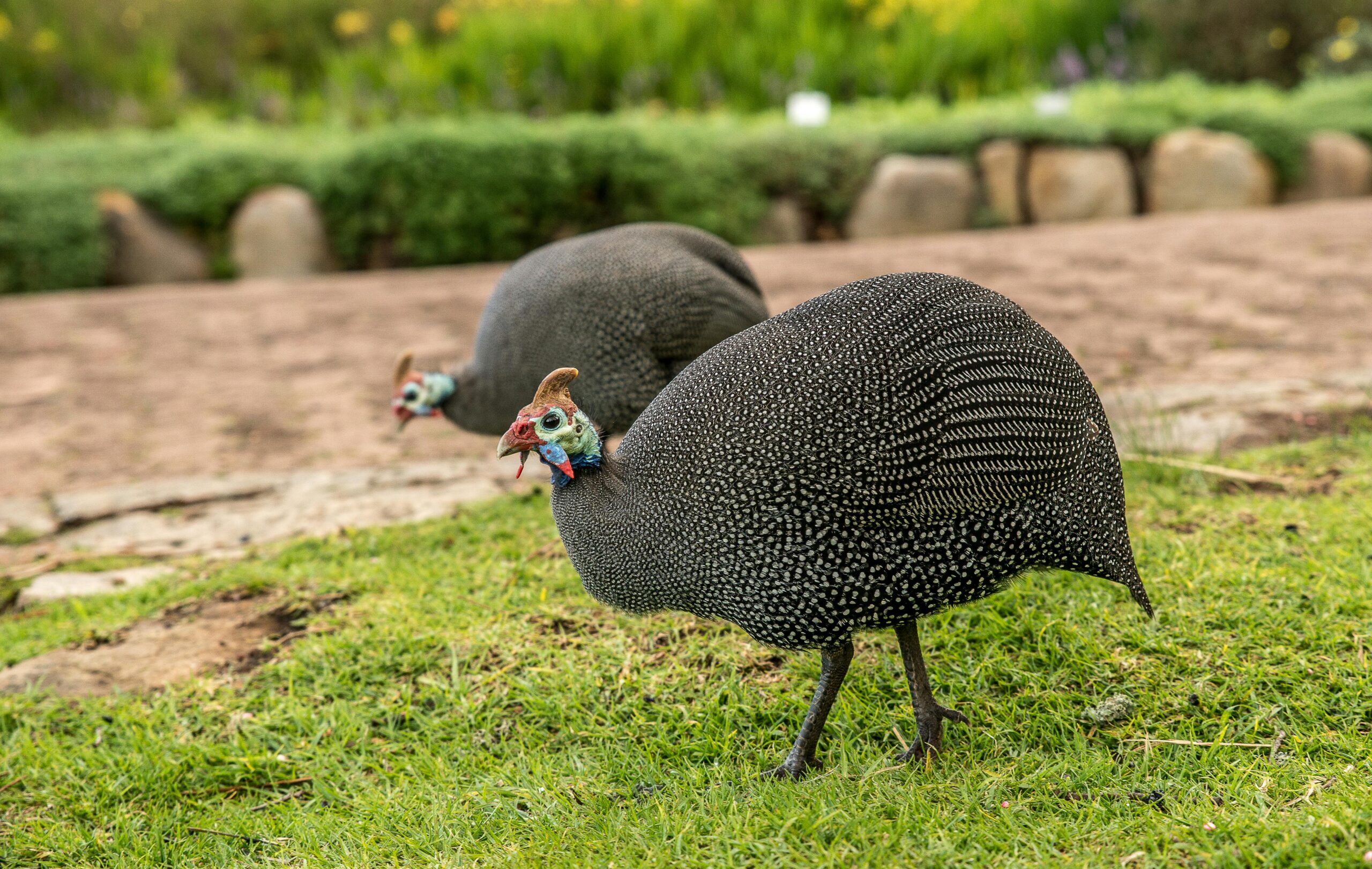
Commercial guinea fowl farming offers a unique opportunity for agripreneurs looking to tap into a hardy, low-input poultry enterprise with strong demand in both rural and urban markets. Guinea fowl are well known for their ability to thrive in harsh conditions, resist many common poultry diseases, and utilise natural forage, making them attractive for farmers seeking to reduce feed costs. Their meat and eggs are often considered premium products, and there is growing demand from households, local markets, and specialty buyers. However, despite their resilience, guinea fowl can be challenging to manage, especially during brooding and early growth stages, where losses are common without proper care.
This guide is designed to help aspiring and emerging agripreneurs approach guinea fowl farming as a structured commercial venture rather than a traditional free-range activity. It focuses on the practical factors that influence survival, growth, and profitability – including managing keets (young guinea fowl), housing and protection, feeding strategies, controlling movement, and identifying reliable markets. Whether you are starting with a small flock or aiming to scale into a larger operation, the principles shared here will help you avoid common setbacks, manage risks, and build a guinea fowl enterprise that delivers steady and meaningful returns.
-
1
 Variety Selection: Pearl, Lavender, or White
In the world of Guinea Fowl farming, your product is defined by the variety of bird you choose to raise. Not all Guinea Fowl are created equal; some are prized for their camouflage and toughness, while others are kept for their beauty or specific meat qualities. Choosing the wrong variety for your specific market, whether you are selling to a high-end safari lodge in the Maasai Mara or a local roadside eatery, can lead to slow sales and wasted resources.
This step walks you through the three primary varieties found across Kenya and the wider African continent: the Pearl (Speckled), the Lavender, and the White. We will look at why the look of the bird matters to your customers, how different colors handle the African sun, and which bird gives you the best "bang for your money" as a beginner. By the end of this section, you will have a clear target for your first flock.
-
2
The Low-Input Financial Model
In the world of agribusiness, "turnover is vanity, but profit is sanity." Many farmers in Kenya and across Africa fall into the trap of looking at the high price of a bird without looking at the cost it took to get that bird to the plate. This step is designed to pull back the curtain on the actual "shillings and cents" of Guinea Fowl farming. We aren't just looking at how much you can sell a bird for; we are looking at why this bird is a financial heavyweight compared to the standard Improved Kienyeji or Broiler chicken.
This step will guide you through the "Low-Input, High-Margin" strategy. We will break down the three biggest "cost-killers" in poultry - feed, medicine, and labor - and show you how the Guinea Fowl’s natural habits slash these expenses by nearly half. You will learn how to calculate your Return on Investment (ROI) and understand why, even though a Guinea Fowl takes a few weeks longer to grow than a broiler, the "Premium Game Meat" price tag makes it a much smarter bet for the patient agripreneur. Whether you are managing a small backyard flock or a 500-bird enterprise, this financial roadmap is your most important tool.
-
3
Sourcing Keets (Young Guinea Fowl)
In the foundation of any building, the quality of the stone determines the strength of the house. In Guinea Fowl farming, your "stones" are your keets - the young, fragile birds that will eventually become your high-profit breeders or meat birds. Sourcing these birds is perhaps the most critical decision in your first year. Unlike chickens, where you can walk into any agrovet and buy "Day-Old Chicks" from a reputable hatchery, the supply chain for Guinea Fowl in Kenya and across Africa is often informal and unorganized.
This step focuses on the "Make or Break" choice: where do you get your starting stock? We will dive deep into the dangers of the "Wild-Caught" trap - where farmers sell you eggs or birds taken from the bush that never adapt to farm life. We will also discuss how to identify a "Quality Breeder," the signs of a healthy keet, and why buying slightly older birds (6 weeks+) might be the best financial move for a beginner, even if they cost more upfront.
By the end of this step, you will know exactly what to look for - and what to run away from - when spending your hard-earned capital.
-
4
Risk: The Flighty Nature & Zoning
Guinea Fowl are not refined birds like modern hybrid chickens; they are essentially semi-wild creatures that we have invited to live on our farms. Two of their most natural traits - their incredible ability to fly and their piercing, metallic alarm call - can become your biggest operational risks if not managed properly. If you do not plan for their "flighty" nature, you may wake up one morning to find your entire 200,000 KES investment roosting in a neighbor's tall eucalyptus tree or, worse, gone forever into the bush. Furthermore, while their noise makes them excellent "security guards" against thieves and snakes, it can lead to legal battles or "bad blood" with neighbors in closely settled areas.
This step teaches you how to "tame the wild" without breaking the bird's spirit. We will explore the technical side of physical restraint, such as wing-clipping and high-fencing strategies that actually work. We will also dive into "Zoning and Diplomacy" - how to choose the right location for your Guinea enterprise and how to keep your neighbors happy (or at least tolerant) when your birds decide to have a 3:00 AM "shouting match." Understanding these risks before you stock your farm is the difference between a peaceful, profitable business and a stressful, loud failure.

-
8
Semi-Intensive Housing Design
In the world of Guinea Fowl farming, your housing strategy is not just about shelter; it is about psychological management. Unlike chickens, which have been bred for centuries to accept low ceilings and cramped quarters, the Guinea Fowl (Kanga) remains a creature of the heights. In the wild, their greatest defense against leopards and hyenas is to roost as high as possible in the trees. If you try to force them into a standard, low-roofed chicken coop, they will become stressed, cease laying eggs, and spend their entire day looking for a way to escape to a nearby tree. To run a profitable commercial enterprise, you must build a "home" that respects these wild instincts while keeping the birds secure from predators and theft.
This step focuses on the technical design of a semi-intensive housing unit. We will discuss why "height is health" for these birds, the specific dimensions required for a thriving flock, and the non-negotiable inclusion of roosting bars. You will learn how to use affordable, local materials - like timber off-cuts, iron sheets, or even stabilized mud - to create a high-roofed sanctuary. We will also cover the "Night Shelter" vs. "Day Run" balance, ensuring your birds have the 2-3 square feet of night space they need to stay calm and productive. By the end of this step, you will have a blueprint for a structure that keeps your birds happy, your neighbors quiet, and your investment safe.
-
9
The Training Period (Home-Binding)
You have built the perfect house, sourced the best birds, and calculated your profits. But there is a single, invisible wall you must build before you ever let your Guinea Fowl taste the open air: the wall of "Home-Binding." In the poultry world, this is the psychological process of teaching a semi-wild bird that your coop is not a prison, but a sanctuary of safety, food, and water. Unlike a chicken that can be bought today and let out tomorrow, a Guinea Fowl released too early will follow its ancient instinct to "run to the horizon." Once they fly over your fence without a "home map" in their brains, they are gone - they will not hear your calls, and they will not return for dinner.
This step is the most nerve-wracking for new agripreneurs, but it is the most rewarding. We will detail the strict 2-to-6-week confinement rule and the "Slow Release" strategy. You will learn how to use "High-Value Treats" to bribe your birds into loving their home and how to use a "Caller Bird" system if you are expanding an existing flock. We will also discuss the "Sunset Ritual" - the specific way you must manage their evening return to ensure they are locked up before the predators (and the darkness) arrive.
By the end of this step, you will have the patience and the plan to ensure that when you finally open the gate, your birds stay right where the money is: on your farm.
-
10
Brooding the Sensitive Keets
There is a strange irony in Guinea Fowl farming: the adult Guinea Fowl is perhaps the toughest, most disease-resistant bird in Africa, but the baby keet is arguably the most fragile. In the first three weeks of life, a keet is like a delicate flame in a windstorm; the slightest mistake can snuff it out. While an adult can survive a torrential downpour or a night in a tree, a keet can be killed by something as simple as the morning dew on a blade of grass. If they get wet, they get chilled; if they get chilled, they die - often within minutes. This "Danger Zone" is where most aspiring agripreneurs fail, losing 50% to 80% of their brood and quitting the business in frustration.
This step is your manual for survival. We will focus on the two non-negotiable pillars of brooding: Heat and Dryness. You will learn how to maintain a steady temperature of 35°C without expensive equipment, using local solutions like charcoal stoves (jikos) or infrared bulbs. We will also dive into the "Bone-Dry" rule - why you must never let keets touch damp ground or open water dishes where they can drown or get soaked. By the end of this step, you will have a "Fortress of Growth" that ensures your keets reach the 6-week mark, where they finally become the "rugged" birds you were promised.
-
11
Pest Control Integration
Imagine having a workforce that works from sunrise to sunset, requires no wages, and actually pays you in high-quality meat and eggs while they work. This is the "Guinea Fowl Army." One of the most brilliant strategic advantages of Guinea Fowl farming in Africa is their natural instinct as apex insect hunters. While a chicken is a "scratcher" that digs up your seeds and destroys the roots of your vegetables, the Guinea Fowl is a "gleaner." They patrol your shamba with military precision, stretching their long necks to pluck ticks from tall grass, snails from cabbage leaves, and crickets from the soil surface - all without ruining your precious crops. For an integrated agripreneur, this isn't just farming; it’s a biological security system.
In this step, we explore how to deploy your birds as a mobile pest control unit. We will discuss the specific pests they target - including the notorious "Blue Tick" that plagues cattle and the destructive "Diamondback Moth" in kale (Sukuma Wiki) patches. You will learn how to time their release to maximize their hunting efficiency and how to manage the "Guinea Fowl vs. Seedling" balance (because even a Guinea Fowl can be tempted by a very young sprout). We will also look at the financial "double-win": reducing your expenditure on expensive chemical pesticides while simultaneously lowering your feed bill. By the end of this step, you will view your birds not just as livestock, but as essential partners in your farm’s ecosystem.
-
15
High-Protein Feeding (The Keet Start)
In the first few weeks of a Guinea Fowl’s life, their body is a high-speed construction site. Unlike a chicken, which is bred for steady growth, a keet is biologically "programmed" to develop strong wings, dense muscle, and a rugged immune system as quickly as possible to survive the African bush. To fuel this rapid development, their engine requires a very specific type of high-octane fuel: Protein. Most first-time agripreneurs make the fatal mistake of feeding keets "Chick Start" or "Kienyeji Mash." While these are fine for chickens, they are far too weak for Guinea Fowl. A keet fed on standard chicken mash is like a high-performance tractor trying to run on watered-down diesel; they will grow slowly, develop weak bones, and become susceptible to "pasting" (diarrhea) that can wipe out the flock before they reach the one-month mark.
This step focuses on the "Nutritional Powerhouse" phase. We will discuss why a 24% to 28% protein level is non-negotiable for the first 4 to 6 weeks. You will learn how to identify the right commercial feeds - often labeled as "Turkey Starter" or "Game Bird Starter" - and how to "boost" standard feeds using local, high-protein ingredients like Omena (silver cyprinid fish), blood meal, or even crushed insects if commercial options are unavailable or too expensive. We will also cover the "Feeding Frequency" and the importance of "Fine Grind" texture, ensuring every keet gets the nutrients they need to transition from fragile babies to "armored" adults. By the end of this step, you will be feeding for strength, not just survival.
-
16
Foraging & Supplementation
If you treat a Guinea Fowl like a broiler chicken - keeping it locked in a room and pouring expensive commercial feed into troughs - you will likely go broke. The true financial magic of the Guinea Fowl lies in its ability to turn the African landscape into a free buffet. These birds are biological foragers; their bodies are designed to extract high-quality nutrients from things we consider waste or pests. However, "free-range" does not mean "zero-care." Transitioning your birds from the high-protein brooder to the open field requires a strategic hand. If you simply stop feeding them, they will wander too far looking for food and never return, or they will become weak and easy targets for predators.
This step focuses on the "80/20 Rule": allowing your birds to forage for 80% of their diet while you provide the critical 20% in strategic supplements. We will discuss the "Evening Enticement" strategy - using local grains like millet, sorghum, and maize to anchor your birds to the coop. You will learn how to identify "High-Value Foraging Zones" on your farm and how to supplement with calcium for egg-layers and energy for the colder months. By the end of this step, you will understand how to slash your feed bill by nearly 80% while maintaining a flock that is heavier, healthier, and more flavorful than any bird raised strictly on commercial mash.
-
17
Disease Management
One of the most attractive features of the Guinea Fowl for an African agripreneur is its reputation as the Iron Bird. In a landscape where Newcastle Disease or Gumboro can wipe out a chicken farm in a single weekend, the adult Guinea Fowl (Kanga) often stands tall, seemingly untouched by the plagues of the poultry world. However, this Adult Resistance is not a magic shield; it is a biological advantage that must be maintained through smart management. If you neglect their basic health, even the toughest Kanga will eventually succumb to internal parasites or localized outbreaks that could have been prevented for the price of a few shillings.
This step focuses on shifting your mindset from "Curative" (treating sick birds) to "Preventative" (keeping them strong). We will discuss the two main threats to a mature flock: Internal Parasites (Worms) and the occasional Newcastle Disease spillover. You will learn how to set up a simple, stress-free deworming schedule every 3 to 4 months using affordable local products. We will also cover the "External Enemies" - mites and lice - and how a simple "Dust Bath" can be your birds' best pharmacy. By the end of this step, you will know how to keep your flock’s natural immunity at its peak, ensuring your "rugged" birds stay rugged.
-
18
Water Hygiene in Dry Climates
Water is more than just a drink - It is the lifeline of your poultry business. However, for a Guinea Fowl farmer, water is also a double-edged sword. If the water is dirty, it becomes a highway for disease; if it is too warm, the birds will refuse to drink and stop growing; and if the containers are poorly designed, your precious keets will literally drown in the very liquid meant to save them. In dry climates, the sun acts as a giant incubator for bacteria in your water troughs. If you leave a plastic bucket of water in the 30°C sun, by midday, that water is a "soup" of germs that can cause sudden death in your flock.
This step focuses on the "Safe Hydration" strategy. We will explore how to provide constant, cool, and clean water even in the hottest months. You will learn the technical difference between "Open Troughs" and "Nipple Drinkers," and why the latter is the gold standard for preventing both drowning and disease. We will also discuss the "Cooling Hack" - using traditional clay pots and shaded Water Stations to ensure your birds don't get heatstroke. By the end of this step, you will have a water management system that is efficient, hygienic, and specifically designed to keep your Guinea Fowl Arm" hydrated and healthy without wasting a single drop.
-
19
Managing the 1:5 Breeding Ratio
In the natural African bush, Guinea Fowl are known for their loyalty; they often form monogamous pairs, where one male stays with one female for the entire breeding season. However, for the commercial agripreneur, "loyalty" can be expensive. If you keep one male for every female, your feed bill will skyrocket while your egg production remains limited by the number of hens. To run a profitable hatchery or egg enterprise, you must transition your birds from their wild "monogamous" instincts to a managed "harem" system. This means carefully selecting the most vigorous, healthy males to service a larger group of females - ideally a ratio of one cock to five hens (1:5).
This step focuses on the "Social Engineering" of your flock. We will discuss how to identify the "Alpha" males that have the highest fertility rates and how to manage the transition so the hens accept a shared partner. You will learn the visual and behavioral cues to distinguish a high-performing breeder from a "lazy" one and how to prevent "inter-male warfare" that can lead to injuries in a confined breeding pen. We will also cover the impact of age on fertility and why refreshing your male stock every two years is a non-negotiable rule for maintaining high hatch rates. By the end of this step, you will have a breeding "engine" that produces the maximum number of fertile eggs for every shilling spent on feed.
-
20
The Hidden Nest Hunt
In the wild, a Guinea Fowl’s greatest survival skill is her secrecy. To protect her future offspring from monitors, snakes, and hawks, the Guinea Fowl hen is a master of the "Hidden Nest." She will not use a comfortable, elevated nesting box like a refined hybrid chicken; instead, she will find the thickest patch of stinging nettles, the darkest corner of a collapsed grain store, or a deep hole in the bush to deposit her eggs. For the commercial agripreneur, this instinct is a financial nightmare. If you do not find these nests within 24 to 48 hours, your "liquid gold" (fertile eggs) will either be eaten by predators, ruined by the African sun, or become "stale," leading to zero hatch rates in your incubator. Every egg left in the bush is a potential 2,000 KES bird rotting in the dirt.
This step is about outsmarting the bird. We will move from "Strategy" to "Operations," focusing on the daily task of nest management. You will learn the "Follow the Leader" technique - how to spot the behavior of a hen that is secretly "communing" with a hidden nest. We will discuss the "Decoy Egg" strategy to trick hens into laying where you want them to, and the technical "Candling" method to check if a found nest is still fresh or ready for the bin. By the end of this step, you will have a systematic "Search and Recover" routine that ensures every egg laid on your farm ends up in your kitchen or your incubator, not in a predator's stomach.
-
21
Incubation (26-28 Day Cycle)
The Guinea Fowl hen has a unique reproductive strategy: she lays a massive number of eggs (sometimes 60 to 100 in a season) but she is, by human standards, a "terrible mother." In the African bush, a Guinea Fowl hen will often lead her newly hatched keets through tall, dew-soaked grass at dawn, chilling them to death, or she may simply get distracted by a grasshopper and wander away from her nest entirely. If you rely on a Guinea hen to hatch and raise your next generation of profit, you are gambling with a 70% failure rate. For the commercial agripreneur, the goal is to decouple the laying from the hatching. We want the Guinea hen to stay in "production mode" (laying more eggs) while we use more reliable "technology" to handle the delicate 28-day incubation.
This step explores the two most successful methods for hatching Guinea Fowl eggs: the Artificial Incubator and the Foster Mother (Kienyeji Chicken). You will learn why the 28-day cycle requires more patience and higher humidity than a standard chicken egg, and how to "trick" a local broody chicken into raising a high-value brood of Guinea Fowl for you. We will also cover the technical "Turning" requirements and the "Lockdown" period - the final three days when the keet is struggling to break through its famously thick shell. By the end of this step, you will be able to turn a basket of eggs into a vibrating room full of healthy, hungry keets with military-like precision.
-
22
Early Sexing Challenges (Bucks vs. Hens)
In the world of commercial poultry, "sexing" (telling males from females) is usually done on day one. With Guinea Fowl, nature has played a trick on the farmer: they are "monomorphic," meaning males and females look almost identical for the first few months of life. If you are raising birds for meat, this isn't a problem; but if you are building a breeding flock or selling "guaranteed" hens to other farmers, not knowing who is who can lead to disaster. Imagine keeping 50 birds for 6 months only to realize you have 45 noisy males fighting over 5 stressed-out females. This imbalance leads to broken legs, constant screaming, and zero egg production.
This step is your "Detective’s Guide." We will tackle the challenge of identifying the "Bucks" (males) from the "Hens" (females) using the three most reliable methods: Vocalization (The Call), Anatomy (Helmet and Wattles), and Behavior. You will learn why you shouldn’t trust your eyes until at least week 12 to 16, and why the "Two-Syllable Rule" is the only 100% accurate way to identify a female. By the end of this step, you will be able to sort your flock with confidence, ensuring a peaceful 1:5 ratio that maximizes both harmony and profit.
-
23
The Health & Lean Meat Angle
In the modern Kenyan marketplace, there is a growing class of "Wellness Warriors" - urban professionals in Nairobi, Mombasa, and Kisumu who are deeply concerned about what they eat. They are wary of "industrial" chicken raised on growth hormones and constant antibiotics. To these buyers, the Guinea Fowl isn't just a bird; it’s a functional health food. Its meat is naturally "lean" because the bird is an active forager, and its nutritional profile is superior to almost any other poultry. To win in this niche, you must stop selling "meat" and start selling "vitality."
This step focuses on positioning your Guinea Fowl as the ultimate organic choice. We will dive into the specific nutritional advantages - lower cholesterol, higher protein, and a rich iron content - that make it perfect for fitness enthusiasts and heart-healthy diets. You will learn how to craft a "Health Pitch" that resonates with gym-goers and health-conscious families, turning the bird's natural "leanness" from a potential drawback (dryness) into its greatest selling point. By the end of this step, you will know how to market your flock as a premium, "clean" protein source that justifies a price tag 200% higher than a standard broiler.
-
24
Institutional Sales (Hotels & Lodges)
While individual urban buyers are great for high margins, Institutional Sales are the backbone of a stable agribusiness. Selling one or two birds at a time is labor-intensive; selling 50 birds a week to a single safari lodge or a high-end restaurant is a "Scale Strategy." In the East African tourism circuit - from the Maasai Mara to the Serengeti - international guests arrive expecting an "Authentic African" culinary experience. Guinea Fowl is the centerpiece of that narrative. Furthermore, there is a massive, often overlooked "hidden market" in the Chinese restaurant sector within our major cities, where Guinea Fowl is considered a high-status delicacy (often substituted for pheasant).
This step focuses on Professional B2B (Business-to-Business) Pitching. You will learn how to move from being a "vendor" to a "partner." We will discuss the technical requirements for "Supply Contracts," including consistency in weight, cold-chain logistics, and the "Chef’s Specification." You will learn how to approach Procurement Officers at luxury lodges and how to navigate the specific cultural preferences of the Chinese culinary market. By the end of this step, you will have a plan to secure long-term, predictable income that allows you to plan your farm’s expansion with confidence.
-
25
Value Addition (Ready-to-Cook & Smoked Birds)
In agribusiness, the closer you get to the consumer’s plate, the higher your profit. If you sell a live Guinea Fowl, you are selling a "commodity" that requires the buyer to do the dirty work of slaughtering and plucking. If you sell a "Dressed and Vacuum-Packed" bird, you are selling convenience. If you sell a "Smoked Guinea Fowl," you are selling a delicacy. Value addition is the secret to doubling your margins without increasing the size of your flock. By transforming a raw carcass into a "Ready-to-Cook" or "Gourmet" product, you move out of the competitive poultry market and into the high-end gift and specialty food sector.
This step focuses on the technical and marketing aspects of processing. We will discuss the "Vacuum-Pack" revolution - how to extend shelf life and professionalize your branding. We will also dive into the "Smoked Kanga" niche, a high-value product perfect for the tourist and expatriate gift market. You will learn how to use local hardwoods for smoking and how to package your birds so they look like they belong in a boutique butchery in Nairobi’s Village Market or a luxury safari gift shop. By the end of this step, you will be selling a "brand," not just a bird.
-
26
Ornamental & Feather Sales (The Zero-Waste Strategy)
In a truly efficient agribusiness, nothing goes to waste. While most poultry farmers focus solely on the meat, the Guinea Fowl offers two high-value "by-products" that can often cover your entire monthly feed bill: Fertile Ornamental Eggs and those iconic Polka-Dot Feathers. In the global fashion and craft industry, the distinct spotted pattern of the Pearl Guinea Fowl is a "classic" aesthetic. From luxury hat-making in Europe to high-end jewelry and fly-fishing lures, these feathers are a premium commodity. Meanwhile, within Africa, there is a massive market of "hobbyist farmers" who want to start their own small flocks but cannot afford mature birds. By selling fertile eggs and cleaned feathers, you transform your "waste" into a secondary revenue stream that requires almost zero extra capital.
This final step focuses on the Niche Aesthetic Market. You will learn how to harvest, clean, and grade feathers for the fashion industry and how to market your "Hatching Eggs" to other aspiring agripreneurs. We will discuss the "Sanitation for Sale" rule - ensuring your ornamental products are free from mites and bacteria - and how to use digital platforms like Instagram and Etsy to reach international buyers who value the "African Safari" aesthetic. By the end of this step, you will have a "Circular Economy" on your farm where every part of the bird, from the shell to the wing-tip, is converted into profit.