Commercial Snail Farming Guide

- Description
- Curriculum
- Reviews
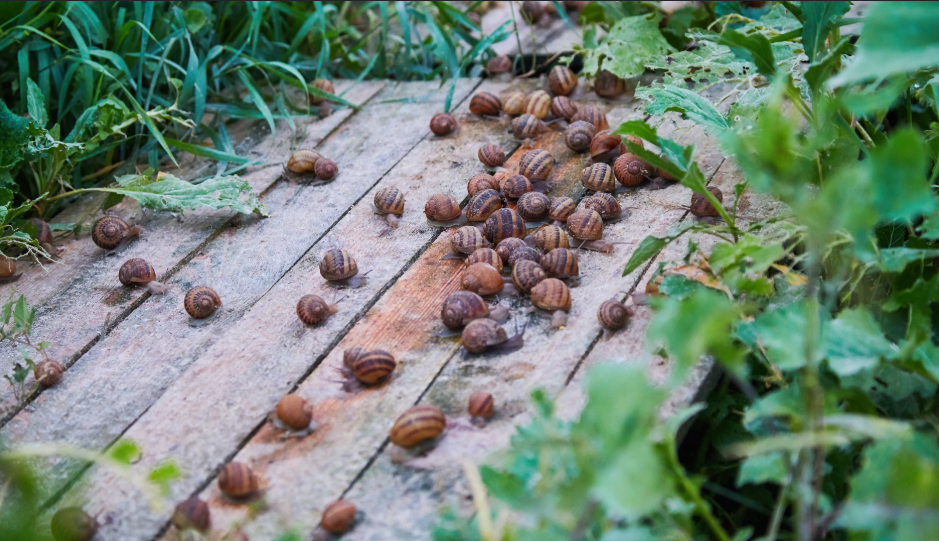
Commercial snail farming offers a unique, low-space agribusiness opportunity for entrepreneurs looking to enter a niche but growing market. Snails require relatively small areas to rear, have low noise and minimal disturbance, and can be integrated into backyard or peri-urban setups. Their meat is considered a delicacy in certain markets and is gaining attention for its nutritional value, while by-products such as slime are increasingly used in cosmetic and skincare products. However, snail farming is not as simple as keeping snails in a pen – profitability depends on proper housing, moisture control, feeding, breeding management, and access to reliable markets.
This guide is designed to help aspiring and emerging agripreneurs approach snail farming as a structured commercial venture rather than an experiment. It focuses on the practical factors that determine survival, reproduction, and income – including setting up suitable enclosures, managing humidity and feeding, handling breeding cycles, reducing losses, and identifying buyers. Whether you are starting small or exploring ways to scale, the principles shared here will help you avoid common beginner mistakes, maintain healthy stock, and build a snail farming business that can generate steady and meaningful returns.
-
1
 Breed Selection: Archachatina vs. Achatina
Before you build a single pen or spend a shilling on feed, you must decide which employees you are hiring. Not all snails are created equal. If you pick the wrong breed, you might end up with snails that eat a lot but never grow big enough to sell at a premium price, or snails that die off the moment the weather changes. This step is about matching the right snail breed to your specific business goals - whether that is massive size for the export market or high-speed breeding for local meat consumption.
In Africa, we primarily deal with three major players: Achatina achatina, Archachatina marginata, and Achatina fulica (Lissachatina fulica). Each has a "personality" and a "business profile." Understanding these differences is the difference between a hobby and a high-margin enterprise. We will break down how to identify them, which one suits the Kenyan climate best, and why your choice of breed dictates your entire farm infrastructure.
-
2
Capital & The Low-Burn Budget
One of the most attractive aspects of snail farming in Kenya and across Africa is the "Low-Burn" entry. Unlike poultry, which requires expensive vaccines and high-energy lighting, or dairy, which requires significant land and expensive fodder, a snailery can be launched in a backyard, on a balcony, or in a small corner of a rural shamba. This step is about the financial blueprint. We are moving away from the "hobbyist" mindset and into a "business-first" approach where every shilling spent must contribute to the growth or survival of your stock.
In this section, we will break down the two types of spending you will encounter: CapEx (Capital Expenditure) - the one-time costs like pens and weighing scales and OpEx (Operating Expenditure) - the recurring costs like feed supplements and water. We will look at a "Pilot Budget" of KES 10,000 ($80) to show you exactly how to kickstart a professional-grade operation that can be scaled up as your snails multiply. The goal here is "Patience-to-Profit": keeping your costs so low in the first six months that when the snails reach harvest size, your margins are nearly 80-90%.
-
3
Sourcing Parent Stock
In poultry farming, you buy day-old chicks from a reputable hatchery because you want birds that grow fast and don't die easily. Snail farming is exactly the same. Your Parent Stock - the mature snails you buy to start your colony - are the "engine" of your business. If the engine is knocked, the car won't move. Many aspiring agripreneurs in Kenya make the mistake of going into the bushes or forests after a heavy rain to "pick" their startup capital for free. While this seems like a "Low-Burn" win, it is almost always a recipe for disaster.
This step focuses on the science of sourcing. We will discuss why Certified Point-of-Lay (POL) snails are worth the investment and how to identify a "sick" snail before you pay for it. A "Point-of-Lay" snail is a mature adult that is physically ready to start laying eggs immediately. By sourcing these from a professional farm rather than the wild, you ensure that your snails are already used to captive feeding, are free from heavy parasite loads, and have the genetic "stamina" to produce hundreds of healthy hatchlings. We will also look at the "Quarantine Protocol" - the first thing you must do when your new "employees" arrive at your farm.
-
4
Risk: Moisture & Temperature Control
In the world of snail farming, you aren't just a livestock keeper; you are a "Climate Manager." Snails are roughly 80% water. They do not have skin like humans or feathers like chickens to protect them from the sun. Instead, they rely entirely on the moisture in the air (humidity) and the coolness of the soil to stay alive. If your snailery gets too dry, your snails will go into a "hibernation" state called aestivation. They retreat into their shells and seal the opening with a white, chalky membrane. While they aren't dead yet, they have stopped eating, stopped growing, and stopped laying eggs. Your business "engine" has effectively shut down.
This step is about mastering the two most critical environmental factors: 80% Humidity and a Temperature range of 22°C to 28°C. In many parts of Kenya and Africa, the afternoon sun can easily push temperatures above 30°C, while the dry season can drop humidity to 40%. We will discuss practical, low-cost ways to "cheat" the weather - from the "Wet Sack" method to the "Evening Mist" protocol. Understanding these risks is what separates the professional agripreneur from the person who simply watches their snails "disappear" into their shells for six months of the year.

-
8
Housing Designs: Pens, Trenches, or Boxes
Choosing a structure that fits your space, climate, and budget.
In snail farming, your "infrastructure" is more than just a cage; it is a controlled environment designed to mimic the damp, dark floor of a tropical forest. Because snails are master escape artists and highly vulnerable to predators, your housing choice is the most important physical investment you will make. Whether you are an urban "agripreneur" with only a small balcony in Nairobi or a rural farmer with acres of land in Uasin Gishu, there is a housing design that fits your scale.
This step explores the three primary systems: Intensive (Boxes), Semi-Intensive (Trenches/Pits), and Extensive (Free-range pens). We will break down which design is "profit-optimized" for your specific situation. A poorly designed pen leads to "escaped assets" and high mortality, while a well-designed one makes cleaning, feeding, and egg collection effortless. We will focus on the "Goldilocks" principle: a home that is not too dry, not too wet, and most importantly, completely predator-proof.
-
9
Soil Treatment & Management
Why Dirty soil is your snailery’s biggest silent killer.
In snail farming, soil is not just "dirt" - it is the substrate. It is where your snails sleep during the heat of the day, where they drink moisture through their skin, and most importantly, where they bury their eggs. If your soil is poor, your snails will develop shell deformities. If your soil is infested with microscopic predators or fungi, your eggs will rot before they hatch. This step is perhaps the most "technical" part of the infrastructure phase because it requires you to play the role of a chemist and a doctor.
We will focus on Loamy Soil. Why? Because clay soil gets waterlogged and suffocates snails, while sandy soil doesn't hold enough moisture to keep them hydrated. However, even the best loamy soil from a forest or a garden is "alive" with ants, termite eggs, and harmful bacteria. This section teaches you the "Sterilization Protocol" - the process of heat-treating your soil to create a safe, neutral environment. We will also discuss the "pH Balance" (the acidity of the soil) and why adding a little lime can supercharge your snails' growth.
-
10
Vegetation & Micro-Climate
Creating a natural Shelter System within your pens.
In the wild, a snail does not sit on bare soil waiting for the sun to find it. It hides under the broad, cool leaves of a cocoyam plant, crawls beneath a fallen banana stalk, or tucks itself into the damp crevices of rotting vegetation. As an agripreneur, your goal is to recreate this "Forest Floor" inside your pens. Simply having a box with soil is not enough; that is a "prison." To turn it into a high-production snailery, you must plant or provide vegetation that serves three purposes: it provides shade, it maintains humidity, and it acts as a 24/7 snack bar.
This step focuses on "Micro-Climate Management." We will discuss which plants are the best "roommates" for your snails and how to arrange them so you don't lose sight of your "stock." In Africa, we have an advantage: plants like Cocoyams or Arrow Root (Nduma), Sweet Potatoes, and Bananas grow easily and are the "gold standard" for snail housing. We will also cover the "Vertical Space" trick - using climbing plants or stacked leaves to double your snails' living area without building a bigger pen.
-
11
Predator Proofing (The Mesh Rule)
Because snails are slow, soft, and rich in protein, they are the "easy meal" of the animal kingdom. In the African landscape, a single night of negligence can wipe out a year’s worth of work. Your "assets" cannot run away, so their housing must be their fortress. This step focuses on the "Big Three" predators: Soldier Ants (Siafu), Rats, and Lizards. While we often think of large predators, it is the tiny ant that is the most lethal - a swarm of Soldier Ants can skeletonize a thousand snails in a single night.
This section teaches you the "Mesh Rule" and the "Moat Strategy." We will discuss why the type of wire or netting you use is a business decision, not just a hardware choice. We will also cover the "Physical Perimeter" - how to build layers of defense that keep out everything from a hungry rodent to a tiny fly that wants to lay eggs in your snail’s breathing hole. Protecting your snails is about "thinking like a predator" and closing every gap larger than a pencil tip.
-
15
The Organic Feed Formula
Feeding snails is perhaps the most satisfying part of being an agriprenuer because it is the only livestock business where your feed store is often your kitchen bin or the local market’s floor. Snails are nature’s ultimate recyclers; they are vegetarians that thrive on a wide variety of organic matter. However, there is a big difference between a snail "surviving" on a piece of dry cabbage and a snail "growing at maximum speed" on a professional organic formula. If you want to move from a backyard hobby to a commercial success, you must understand the Nutritional Balance - the mix of vitamins, energy, and protein that keeps a snail healthy and active.
In this step, we will break down the Organic Feed Formula. We aren't talking about expensive processed pellets. We are looking at how to utilize "Free Feed" like watermelon rinds, papaya leaves, and vegetable trimmings. We will also introduce the concept of "The Mash" - a simple way to blend organic waste into a high-energy paste that hatchlings and adults can eat easily. In Africa, we are blessed with a year-round supply of the snail's favorite snacks. Learning how to combine these into a consistent feeding schedule is the secret to reaching "Table Size" in 6 to 8 months rather than 12.
-
16
The Calcium Requirement
Why Calcium is the non-negotiable "Engine" of snail growth.
A snail is born with a tiny, transparent shell, and every single millimeter of growth from that moment on requires a massive amount of calcium carbonate. In the wild, snails rasp at limestone rocks or eat soil rich in minerals. In a commercial snailery, they are trapped in a box; if you do not provide enough calcium, they will turn into "cannibals." They will literally rasp at the shells of their brothers and sisters to survive, leading to cracked shells, stunted growth, and mass mortality.
This step is about Shell Integrity. For an agripreneur, a snail with a thin, weak shell is a "reject." It won't survive transport to the market, and it looks unappealing to customers. We will look at the cheapest, most effective ways to source calcium in Kenya and across Africa - from the "Eggshell Goldmine" at local bakeries to the use of agricultural lime. We will also cover the "Self-Service Calcium Station," a simple way to ensure every snail, from the smallest hatchling to the jumbo breeder, gets exactly what it needs to build a heavy, profitable shell.
-
17
Hydration & Mist Irrigation
Water is the lifeblood of a snailery. In the wild, snails are only active when it rains or when the dew is heavy on the grass. As an agripreneur, you must understand that snails do not "drink" water with their mouths in the way a cow or a chicken does; they absorb moisture directly through their skin and their "foot." If the environment is dry, the snail loses its internal fluids to the air and retreats into its shell to survive. If the environment is perfectly misted, the snail stays out, feeds aggressively, and grows at a rapid pace. This step is about the Hydration Protocol - the art of keeping your snailery damp without turning it into a swamp.
In this section, we will discuss why "Misting" is superior to "Pouring." We will cover the specific timing of the Evening Mist, the most critical 15 minutes of your farming day. In the African climate, where the sun can be unforgiving, we will look at low-cost manual irrigation tools and how to set up a "Manual Spray Schedule" that ensures your snails are active through the night. We will also address the "Water Quality" rule: why the chlorine in your tap water might be the reason your snails aren't thriving and how to fix it for free.
-
18
Hygiene & Slime Management
Preventing Slime-Overload and the silent spread of disease.
In any intensive livestock business, waste management is the difference between a thriving farm and a graveyard. Snails are unique because their "waste" isn't just droppings; it is Slime (Mucus). While this slime is essential for their movement, in a confined pen, it can quickly become a hazard. Imagine living in a room where the floor is perpetually covered in a sticky, wet substance that traps old food and bacteria - that is what a neglected snail pen feels like. If you allow slime and droppings to build up, your snails will develop "fungal foot," their growth will stunt, and you will invite the dreaded "Snail Plague" (bacterial infections) that can wipe out your entire stock in days.
This step is about the Sanitation Routine. We will move beyond just "cleaning" and into Bio-security. We will discuss how to manage the soil to prevent it from becoming a toxic swamp and how to handle your snails without stressing them. In the African heat, organic waste rots fast. We will establish a "Daily, Weekly, and Monthly" hygiene checklist that keeps your snailery smelling like a fresh forest floor rather than a garbage dump. This is the "health insurance" for your agriprenuer venture.
-
19
Egg Collection & Incubation
Managing the transition from fragile eggs to profitable hatchlings.
Because snails are hermaphrodites (each snail has both male and female reproductive organs), almost every adult in your pen is a potential layer. When conditions are right - damp soil, plenty of calcium, and low stress, a single Achatina achatina can lay between 200 and 500 eggs in a single clutch. However, in an intensive system, leaving these eggs in the main pen is a massive risk. Adult snails are heavy and can accidentally crush the eggs as they burrow, or the eggs may be eaten by soil mites or even other snails if calcium is low.
This step is about the Nursery Protocol. We will move from "Nature" to "Management" by learning how to identify, collect, and incubate eggs in a controlled environment. Think of this as the "Maternity Ward" of your farm. We will discuss the 21-to-30-day hatch cycle and how to set up an Incubation Box that maintains the perfect "womb-like" conditions: dark, warm, and perpetually moist. Mastering this step ensures that your "hatch rate" stays above 90%, allowing your stock to multiply exponentially every season.
-
20
Managing Hatchlings (Baby Snails)
Raising vulnerable hatchlings into sturdy, high-value juveniles.
When a snail first hatches, it is about the size of a grain of rice and its shell is as thin as a piece of paper. In the African climate, the first 60 days of a snail’s life are the most dangerous. They can be trampled by adults, eaten by a single lizard, or dehydrated by a single dry afternoon. As an agripreneur, you cannot treat hatchlings like adults. They need a "High-Protein/High-Calcium" environment and a specialized housing system that prevents them from "getting lost" in the vastness of a large pen.
In this section, we will discuss the Nursery Box Setup - a dedicated space for snails from day 1 to month 3. We will break down the "Starter Mash" formula, which is different from adult feed, and why you must never feed heavy chunks of cabbage to a baby snail. We will also cover the "Hydration Mist" - which must be finer than the adult spray, to ensure these tiny creatures don't drown in a single large water droplet. Success here means a survival rate of over 85%, which is the secret to a rapidly expanding farm.
-
21
Growth Tracking & Sorting
Why sorting your stock by size is the secret to uniform profits.
In any professional livestock venture, uniformity is the goal. If you have a pen where some snails are the size of a golf ball and others are the size of a bean, you have a management problem. In snail farming, "Sorting" (also known as grading) is the practice of separating your snails based on their shell size and growth rate. Snails, like children in a classroom, grow at different speeds. If you leave "Jumbos" in the same pen as "Small" snails, the bigger ones will dominate the feeding troughs, trample the smaller ones, and even emit pheromones (chemicals) into the slime that can naturally stunt the growth of their smaller siblings.
This step focuses on Growth Tracking. We will move away from "guessing" how your snails are doing and start using a simple Sizing Guide. We will discuss why you should sort your snails every 4 to 6 weeks and how to set up "Growth Classes" (Small, Medium, and Jumbo). By the end of this section, you will understand how to identify your "Fast-Trackers" - the snails that grow the quickest and should be kept as your future Parent Stock - and how to ensure your "Slow-Movers" get the extra nutrition they need to catch up.
-
22
Stock Density Optimization
In the world of commercial snail farming, space is money. If you have too few snails in a large pen, you are wasting expensive mesh, timber, and your own labor in cleaning a mostly empty box. However, the most common mistake for African agripreneurs is "Overcrowding." Because snails are small, it is tempting to squeeze 500 into a space meant for 100. This is a recipe for disaster. Overcrowding leads to "Slime-Choking" (where the soil becomes toxic too fast), stunted growth due to stress, and the rapid spread of diseases. This step is about Density Optimization - finding that perfect balance where every snail has enough "crawl space" to feed but the farm remains profitable.
We will focus on the "Snail-per-Square-Meter" Rule. We will move away from guessing and start using a "Business Density" formula. We will discuss how density requirements change as a snail grows from a tiny hatchling to a jumbo breeder. In the Kenyan climate, where heat can already stress your stock, keeping the right density is your primary tool for temperature control. A crowded pen gets hot and "stuffy" very quickly. Mastering this step ensures your snails reach market weight in record time because they aren't fighting for air, food, or a place to sleep.
-
23
The Clean Meat Branding
In the Kenyan and broader African market, the biggest hurdle isn't biology - it's psychology. While snails are a multi-billion dollar industry globally and a staple in West Africa, many local consumers still view them through the lens of a "garden pest" or a "slime-covered nuisance." As a professional agripreneur, you know that Profit is in the Perception. This step is about moving away from "selling snails" and moving toward "Branding Clean Meat." This step focuses on Positioning. We will discuss how to market your product as a high-protein, zero-cholesterol, organic alternative to beef and poultry. We will move from "wet markets" to "wellness lifestyle" branding.
We will cover the "Farm-to-Fork" transparency - showing your customers your treated soil and organic feed to prove that your snails are "Clean." In a market where health-conscious middle-class consumers in cities like Nairobi, Lagos, or Accra are looking for sustainable proteins, your brand identity is what allows you to charge KES 2,000 per kilo instead of KES 500.
-
24
Harvesting, Processing, Logistics & Storage: The Cold Chain
In the snail business, your profit isn't made when the snail reaches harvest size; it’s made when that snail reaches the customer in peak condition. Because snail meat is high in moisture and protein, it is highly perishable. In the African heat, whether you are transporting from a farm in Nakuru to a restaurant in Nairobi, or shipping from a rural hub to a coastal hotel, Logistics is your invisible partner. If your "Cold Chain" breaks, you don't just lose a sale; you lose your "Clean Meat" brand reputation.
This step focuses on the Harvest right through to Post-Harvest Pipeline. We will discuss the 72-Hour Purge, the "Humane" processing method, and the specific temperature requirements for storage. We will move away from "carrying live snails in hot plastic bags" and move toward Vacuum-Sealed, Temperature-Controlled delivery. Professional logistics allow you to scale beyond your local neighborhood and tap into the lucrative regional export markets.
-
25
Value Addition: Beyond the Meat (Shells & Slime)
If you only sell snail meat, you are leaving 40% of your potential profit on the farm floor. This step is about Diversification. We are looking at the global "Snail Mucin" (slime) industry - a massive trend in Korean beauty (K-Beauty) and high-end skincare, and the industrial uses of snail shells.
As a business person, understand that multiple revenue streams make a business resilient. If the price of meat drops, your "Cosmetic Grade Slime" or your "Calcium-Rich Shell Flour" can keep the cash flowing. This section will teach you how to harvest these byproducts without harming your snails, turning your "Low-Burn" setup into a multi-product enterprise. We will move from being a "farmer" to being a "raw material supplier" for the beauty and horticultural industries.
-
26
Direct-to-Consumer & Export
Scaling from local "Snail Lovers" to international luxury markets.
Snail farming is not just a local food play; it is a high-value export commodity. In Europe (especially France and Italy) and the US, the demand for "Escargot" far outstrips local supply, with the global market projected to cross $1.2 Billion by 2030. However, the "Export Trap" is real - without the right licenses and digital presence, you are just another farmer with a product no one can find.
This step is about Market Integration. We will discuss how to bypass the "middleman" by building a Direct-to-Consumer (D2C) brand using social media "tribes." We will also pull back the curtain on the Export Pipeline, covering the specific sanitary certificates and licenses required to move Kenyan or African snails into the premium European and American kitchens. Your goal is to transition the business from "pushing a product" to "fulfilling an international demand."