Commercial Geese Farming

- Description
- Curriculum
- Reviews
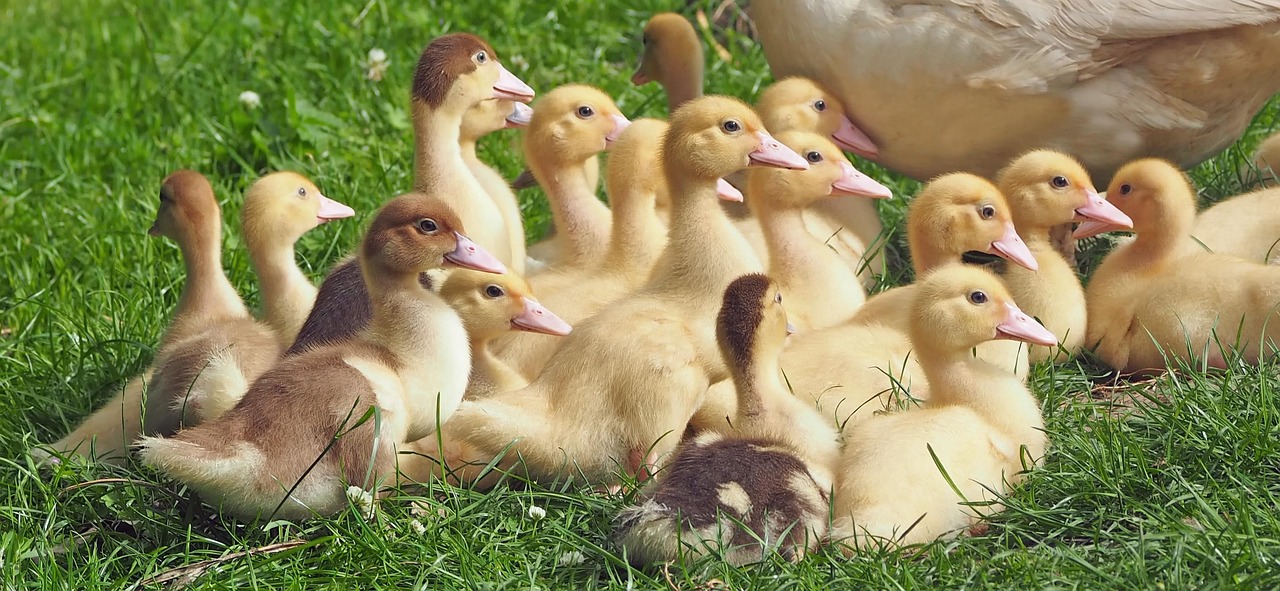
Commercial geese farming offers a niche but potentially profitable agribusiness opportunity for farmers willing to explore less saturated livestock markets. Geese are hardy birds that adapt well to a range of environments, can utilise pasture efficiently, and require relatively lower feed inputs compared to some other poultry when managed properly. They can generate income through meat, eggs, breeding stock, and even farm security, as geese are known for their strong territorial instincts. However, profitability is not automatic – success depends on proper breed selection, feeding balance, flock management, and identifying reliable markets, which are often less developed than those for chicken.
This guide is designed to help aspiring and emerging agripreneurs approach geese farming as a structured business rather than a trial venture. It focuses on the practical decisions that influence growth, reproduction, survival, and income – including housing, feeding strategies, breeding cycles, health management, and market access. Whether you are starting small to test the market or building toward a commercial operation, the insights shared here will help you avoid common mistakes, manage costs, and position your geese enterprise for steady, meaningful returns.
-
1
 Breed Selection: Embden, Toulouse or African
Choosing the right breed is the foundation of your entire business. In this first step, we will break down the three kings of the goose businessworld. If you choose the wrong breed for your specific goal, whether that is meat, feathers, or security, you will struggle with your profit margins.
We will look at the Embden, the Toulouse, and the African/Chinese breeds. Each has a different personality, a different growth rate, and a different paycheck at the end of the season. By the end of this section, you will know exactly which bird fits your land and your bank account.
-
2
Capital Expenditure & Longevity
Most poultry farmers are used to chickens that live for 2 years (layers) or 8 weeks (broilers). Geese are different. A goose is an investment that can pay you dividends for 10 to 15 years.
This section will help you understand why the "entry price" of a goose is high, but the cost over time is actually much lower than any other bird. We will look at budgeting for housing, fencing, and the high "Per-Bird" value that makes geese a savings account with wings.
-
3
Sourcing Parental Stock
Finding your Founding Fathers and Mothers is the most critical logistical task you will face. In this step, we explore the pros and cons of starting with Day-Old Goslings versus Mature Breeding Pairs. While goslings are cheaper to buy, they are fragile and require months of feeding before they give you a return. Mature pairs, on the other hand, are "plug-and-play" - they can start guarding your farm and laying eggs almost immediately, but they come with a higher price tag and the risk of buying someone else’s "culls" (poor performers).
We will discuss how to vet a breeder, what physical signs to look for in a healthy goose, and why "Line Breeding" knowledge is the secret to a flock that doesn't become weak over generations.
-
4
Risk: The Aggression Liability
Geese are famous for their bad attitudes. In a business context, this aggression is a double-edged sword. It is an asset because it provides free security against thieves and predators, but it is a liability because geese do not distinguish between a "thief" and your "toddler" or a "customer."
In this step, we discuss how to manage the "Aggression Liability." We will cover farm layout design - ensuring your Security Wing doesn't interfere with your "Visitor Wing" and how to handle geese safely without getting bruised or bitten. Managing this risk is the difference between a productive farm and a legal or medical headache.

-
8
Night Shelters and Floor Space
Geese are naturally claustrophobic - they hate tight, dark, poorly ventilated spaces. Unlike chickens, which huddle together on a perch, geese sleep on the ground and need room to stretch their massive wings even when indoors.
In this step, we will design a Predator-Proof Housing that provides the Gold Standard of 4 square feet per bird. We will discuss why you should never use mud floors, how to use local materials like wire mesh and timber to save costs, and why "Ventilation at the Top, Solid at the Bottom" is the secret to keeping your flock healthy and dry.
By the end of this section, you will be able to sketch a shelter that keeps your investment safe while they sleep.
-
9
Pasture Management
A goose is a biological lawnmower. While a chicken needs 100% of its food from a bag, a goose can get up to 70% of its nutrition from high-quality grass. This is where the real profit is made.
In this step, we will treat your pasture as an Engine that drives your business. We will discuss the 10 Geese per Acre rule, how to set up Rotational Grazing (paddocks) so your grass has time to recover, and why geese are the perfect Organic Weeders for orchards. We will also touch on the types of grass that geese love most and how to manage overgrazing so your farm doesn't turn into a dust bowl.
-
10
Brooding Goslings (0–6 Weeks)
Brooding is the intensive care unit of your geese business. While adult geese are arguably the hardiest poultry on earth, goslings are the opposite for their first few weeks of life. They are born with soft down that is not yet waterproof, making them extremely vulnerable to dampness, chills, and pasting up.
In this step, we will cover the Dry-and-Warm protocol. We will discuss setting up a Brooding Ring using local materials like hardboard or timber offcuts, managing heat using charcoal jikos or infrared bulbs, and the critical Water-But-Not-To-Swim rule. Mastering this stage is what ensures your capital expenditure investment actually survives to become a profitable adult.
-
11
Water Access for Mating
While geese are land birds that spend 90% of their time grazing, they are still waterfowl. For a commercial breeder, water is not just for drinking, it is a Business Critical fertility tool. Geese are heavy birds; for a gander to successfully mate with a goose, they often need the buoyancy of water to support their weight and ensure proper connection.
In this step, we will discuss the difference between Drinking Water and Mating Water, how to build low-cost Splashing Pools, and why keeping this water clean is the secret to high egg hatchability.
-
15
The Free-Range Diet Formula
Geese are unique among poultry because they are herbivorous foragers. While a chicken scratches the dirt for worms, a goose grazes like a miniature cow.
In this section, we will break down the 70/30 Rule: 70% of their diet should come from your pasture, and only 30% should come from your pocket. We will discuss supplementing with local grains like maize, sorghum, and millet, and why the "Evening Feed" is a strategic business move to keep your birds coming home at night.
We will also cover the essential role of "Grit" - small stones that act as the goose's teeth - without which your birds will starve even in a field of green.
-
16
Disease Resistance & Deworming
Geese are famously called the Hardy Birds of Africa. While your neighbor's chickens are dying from Newcastle Disease or Gumboro, your geese will likely be standing tall. However, hardy does not mean immortal. The biggest threats to a commercial goose enterprise are Internal Parasites (Worms) and Coccidiosis (in goslings).
In this step, we will discuss the 4-Month Deworming Cycle. We will cover the Silent Killer - the Gizzard Worm - and how to identify the signs of a sick bird before it’s too late. We will also touch on basic hygiene that replaces the need for expensive antibiotic cocktails common in chicken farming.
-
17
Toxic Plant Identification
While geese are expert foragers with a natural instinct for what is good to eat, their biological lawnmower setting sometimes fails them in a domestic farm environment.
In this step, we identify the silent green killers hiding in your pasture. Because a goose can consume up to 2kg of green matter a day, even a small patch of the wrong plant can be fatal. We will discuss the Common African Offenders like Nightshade, Datura, and certain lilies. We will also look at how Hunger-Driven Eating is the biggest risk - a well-fed goose will ignore a toxic weed, but a hungry one will eat anything.
By the end of this step, you will know how to perform a Pasture Sweep to ensure your Free-Range engine doesn't accidentally poison your profit.
-
18
Weight Tracking for Market
In business, you cannot manage what you do not measure. A goose that looks big might be all feathers and no meat. In this step, we move from keeping birds to managing inventory.
We will discuss the two major market windows: the Green-Goose (10–12 weeks) and the Mature Goose (6 months+). We will cover how to use a simple Sling and Scale to track growth, and how to identify the Plateau Point - the moment a goose stops gaining weight but continues to eat your grain. Knowing this point is the difference between a high-profit margin and just breaking even on feed costs.
-
19
Managing Gander-to-Goose Ratios
Success in breeding starts with the Social Math of your flock. Geese are naturally monogamous (they like to stay with one partner), but for a commercial agripreneur, we must push them toward Harem Breeding to save on the cost of keeping too many ganders.
In this step, we will discuss the ideal ratio of 1 Gander to 3 or 4 Geese. We will explore why Pair Bonding can be a business hurdle - where a gander chooses a favorite wife and ignores the others - and how to break these bonds to ensure every egg is fertile.
We will also cover the physical signs of a Working Gander and why young males often need an older mentor to learn the ropes of farm security and mating.
-
20
Seasonal Egg Management
Geese are not like chickens; you cannot get eggs from them 365 days a year. They are Seasonal Layers, usually triggered by the onset of the rains or the lengthening of days. In Africa, this often aligns with the transition from the dry season to the wet season when grass is most abundant.
In this step, we discuss how to manage this Explosion of Production. We will cover the design of Nesting Boxes to prevent egg breakage, the 10:00 AM Lock-in rule to ensure eggs are laid in the nest rather than the bushes, and the proper way to store these massive, valuable eggs before they are incubated.
-
21
Incubation Challenges (30-day Cycle)
Incubation is the High-Stakes phase of your goose business. Unlike chicken eggs, which are almost set and forget in a modern incubator, goose eggs are notoriously difficult to hatch artificially. They require a specific micro-climate of high humidity and precise cooling periods that mimic a mother goose leaving her nest to bathe and then returning with damp feathers.
In this step, we will tackle the 30-day cycle. We will discuss why cooling and misting is the secret to a high hatch rate, the technical settings for your incubator, and how to "candle" an egg at Day 10 to see if there is a life growing inside or just a clear egg taking up space. Mastering this step is what separates the casual keeper from the high-volume commercial producer.
-
22
The Security Guard Synergy
In the African agribusiness landscape, security is a major Hidden Cost. Whether it is a Two-legged predator (a thief) or a Four-legged one (a stray dog or honey badger), your assets are always under threat. Geese are the only livestock that provide a Return on Investment while acting as a security guard.
In this step, we discuss the Watchdog Synergy. We will cover how to station your geese at strategic entry points, why their hearing is superior to any dog, and how to use them to protect more vulnerable flocks like chickens or turkeys. This isn't just about noisy birds, it is a strategic security layer for your entire farm.
-
23
Premium Meat Marketing
Marketing goose meat is about selling an experience, not just a meal. Because geese are seasonal and take longer to grow than chickens, they are naturally exclusive.
In this step, we will discuss how to dominate the high-demand windows of Christmas, New Year, and Easter. We will explore the Roast Goose narrative, positioning it as the ultimate centerpiece for family celebrations and how to target the growing middle class and expatriate communities in cities like Nairobi, Lagos, and Johannesburg.
We will also cover the "Farm-to-Fork" branding that emphasizes the organic, grass-fed nature of your birds, which allows you to charge up to 300% more than the price of a standard turkey.
-
24
Feathers and Down Collection
In a standard poultry business, the feathers are waste that you throw in a pit. In a commercial goose enterprise, the feathers are a Secondary Income Stream. The soft "Down" (the feathers closest to the skin) and the white "Body Feathers" are globally prized for high-end pillows, duvets, and winter jackets.
In this step, we discuss Value Addition. we will cover how to dry-pluck or wet-pluck to preserve feather quality, how to wash and grade white feathers, and how to target the hospitality and tourism décor sectors in Africa. This Zero-Waste approach can increase your per-bird profit by 15-20%.
-
25
The Organic Weeder Service
In the modern world, Green is a premium brand. As an agripreneur, you aren't just selling a bird; you are selling a chemical-free labor solution. Geese are specialized grazers that prefer grass and weeds over the tough, woody leaves of many commercial crops. This biological quirk creates a unique business opportunity: the Organic Weeder service.
In this step, we explore how to rent out your flock to orchards, vineyards, and coffee plantations. We will discuss the Selective Grazing advantage, how to price your weeding services per acre, and the logistics of transporting a mobile weeding unit. This service turns your geese into "Active Employees" who earn you daily rental income while they feed themselves for free.
-
26
Live Bird Sales & Agri-Tourism
The final pillar of your business is Reputation. Once you become known as the Goose Expert, you stop selling just meat and start selling Knowledge and Genetics. Selling "Started Pairs" (birds ready to breed) or "Exotic Stock" is the highest-margin part of this business.
In this step, we discuss how to package your birds as Investments for other farmers. We also touch on "Agri-Tourism" - inviting people to your farm to learn about geese, which creates a "Farm-Gate" market where customers come to you, saving you the cost of transport and marketing.