Commercial Duck Farming

- Description
- Curriculum
- Reviews
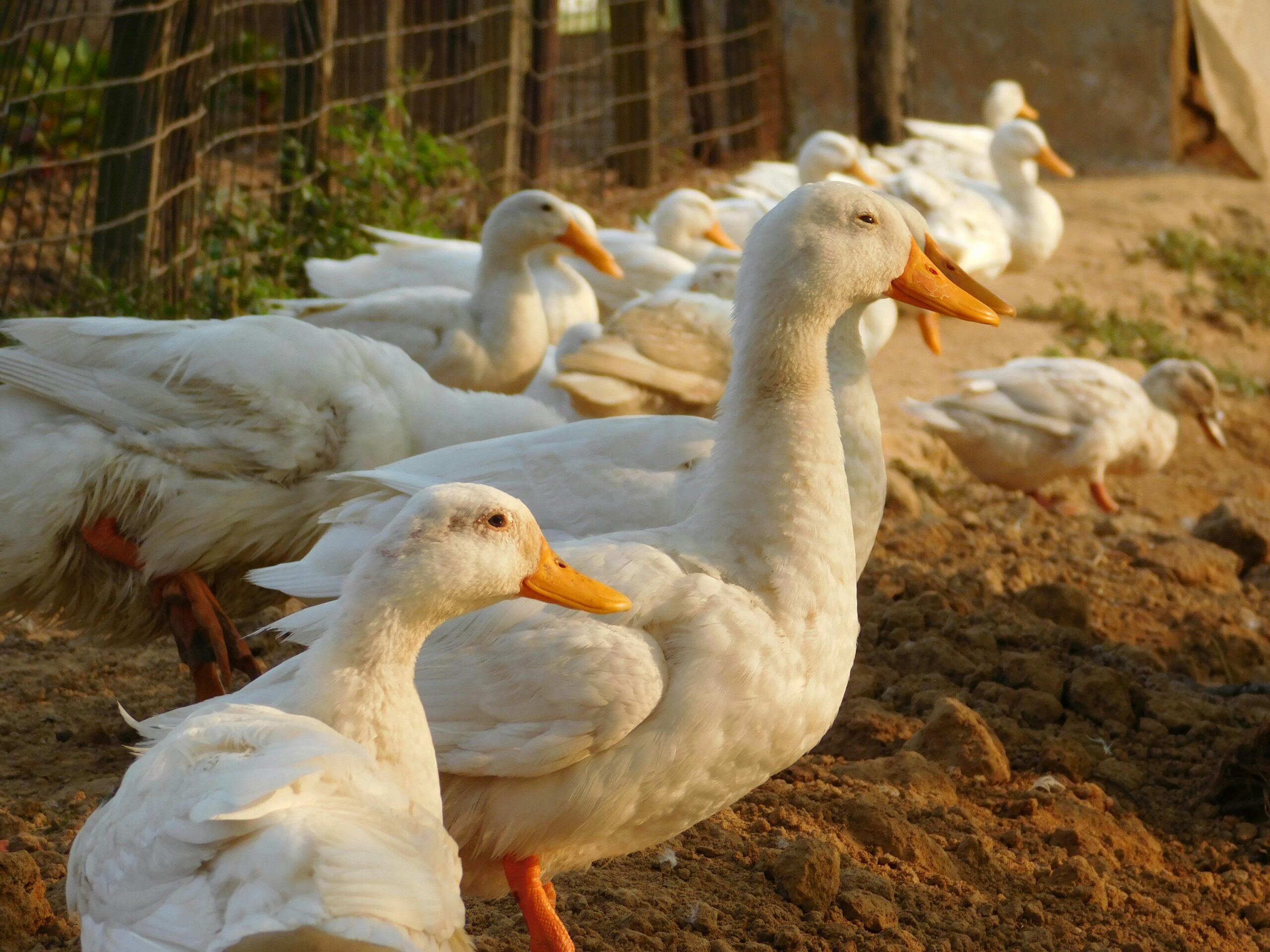
Commercial duck farming offers a unique and often underexplored opportunity for agripreneurs seeking to diversify poultry production and tap into niche markets for meat, eggs, and breeding stock. Ducks are generally hardy birds that adapt well to varied environments and feeding systems, and they can perform well in areas where chickens may struggle. With growing demand from hotels, restaurants, specialty food markets, and health-conscious consumers, duck farming can provide attractive returns when managed with proper planning, feeding strategies, and market positioning.
This guide is designed to help aspiring and emerging agripreneurs approach duck farming as a structured business rather than a small experimental activity. It focuses on the practical factors that determine success, including selecting suitable breeds, setting up appropriate housing and water access, managing feeding and health, controlling mortality, and identifying profitable markets. Whether you are starting with a small flock or aiming to develop a larger commercial operation, the insights shared here will help you avoid common mistakes, stabilise production, and run duck farming with the discipline and profitability mindset required for long-term success.
-
1
 The Market Choice: Pekin, Muscovy, or Khaki Campbell
Introduction
Before you buy a single duckling, you must answer one question: Who is my customer? Unlike chickens, where one bird often can serve both meat and egg needs reasonably well, ducks have very specific "specializations." Choosing the wrong breed may end up like trying to use a lorry to win a Safari Rally-it simply isn’t built for that purpose.
In this step, we begin by breaking down the "Big Three" breeds dominating the African market. We will look at why the Pekin is the king of the kitchen, why the Muscovy is the rugged survivor of the village, and why the Khaki Campbell is a literal egg-laying machine. Understanding these differences ensures you don't spend six months feeding a bird only to find out it won't produce what your market wants.
By the end of this section, you will be able to look at your land, your budget, and your local buyers to decide exactly which breed will form the foundation of your empire. Whether you want a quick 8-week turnover or a steady daily income from eggs, your choice starts here.
-
2
Capital & Comparative Advantage
The biggest mistake many agripreneurs make is treating ducks like "just another type of chicken." If you apply a chicken-budget to a duck enterprise, you will either overspend or miss out on the duck’s secret weapons: resilience and foraging.
In this step, we dive into the hard math of the duck business. We are going to look at the Comparative Advantage, which is a fancy way of saying: "What can a duck do better than a chicken to save me money?"
We will break down the initial startup costs, focusing on why your "veterinary bill" will likely drop by 60-80% compared to broiler farming. We will also explore the Integrated "Rice-Duck" or "Orchard-Duck" systems, which allow the ducks to act as your "hired labor" - weeding your farm and fertilizing your crops for free while they grow.
By the end of this step, you will understand exactly how much capital you need to get started and why the Return on Investment (ROI) for ducks in Africa is often faster and more secure than in traditional poultry.
-
3
Sourcing Quality Day-Old Ducklings (DODs)
The foundation of your duck enterprise is the genetic potential of your ducklings. You can have the most expensive feed and the most sophisticated housing, but if you start with scrub or poor-quality crosses, you will never hit those 8-week target weights.
In the African market, "a duck is not just a duck." Many sellers will offer you "Pekin" ducklings that are actually crosses between local Muscovies and small-bodied village ducks. These birds eat just as much but grow at half the speed, turning your profit into a loss.
In this step, we will learn how to identify "True Breeds" versus "Local Crosses." We will discuss the logistics of transporting Day-Old Ducklings (DODs) - which are significantly more sensitive to transport stress than chicks and how to vet a hatchery.
We will also address why cheap ducklings are often the most expensive mistake you can make. By the end of this section, you will have a checklist to ensure that every coin you spend on stocking your farm is an investment in a bird that is biologically programmed to grow fast and stay healthy.
-
4
Water Access and Predation
In duck farming, there are two silent killers that don't come in the form of a virus or a bacteria. One is a lack of resource, water and the other is a lack of security, predation. While we have praised ducks for being "water-hardy," this doesn't mean they can live without it. In fact, a duck’s very anatomy depends on water for survival. Without enough water to dip their heads, ducks go blind and their respiratory systems fail.
On the other hand, the very nature of ducks, their heavy bodies, loud quacking, and ground-level nesting, makes them "sitting ducks" for every predator in the African landscape.
This step is about defensive farming. We will look at how to secure a consistent water supply even in dry areas, and how to design good security for your flock. We will identify the specific local enemies, from the cunning mongoose and stray dogs to the silent aerial threat of hawks.
As an agripreneur, managing these risks isn't just about animal welfare; it’s about protecting your capital. One night of a loose dog in your pen can wipe out a 200,000-shilling investment. By the end of this step, you will have a strategy to keep your water flowing and your ducks breathing.

-
8
The Wet-Dry Housing Design
If there is one area where duck farming differs most from chicken farming, it is in the house. A chicken house is designed to stay as dry as a bone. A duck house, however, must be built to survive a "flood." Because ducks are water birds, they carry moisture everywhere - on their feathers, in their droppings and through their constant splashing. If you build a standard chicken house with a solid earth floor for ducks, you will end up with a "swamp" within 48 hours. This dampness leads to "wet belly," respiratory distress, and an ammonia smell that will make your neighbors complain.
In this step, we are going to master the 'Wet-Dry' Housing Design. This isn't about spending millions on concrete; it’s about using logic and local materials like timber off-cuts and bamboo to create a space that is dry where the birds sleep and "wet-proof" where they drink.
We will focus on the raised slatted floor system, which is the gold standard for African duck farming because it allows waste and water to fall through, keeping the birds clean and healthy. By the end of this step, you will know how to build a professional, durable shelter that protects your ducks from the elements and predators while significantly reducing your daily cleaning labor.
-
9
Water Infrastructure: Pools vs. Drinkers
The image of a duck happily paddling in a pond is iconic, but as a commercial agripreneur, you must ask: Is that pond making me money or costing me money? In this step, we settle the great debate between "Pools" and "Drinkers." Many beginners believe that without a body of water, ducks won't mate or grow. The truth is quite different. While ducks love to swim, a stagnant pond can quickly become a "soup" of bacteria, droppings, and disease. Conversely, using only small chicken drinkers will lead to the health issues we discussed in Water Access and Predation section, like blocked nostrils and "sticky eye."
This section focuses on the Commercial Middle Ground. We will explore why you don't actually need a swimming pool for meat and egg production, and how to design "deep-access" drinkers that satisfy a duck’s biological needs without creating a muddy mess. We will also discuss the specific case where a pool is necessary - breeding. By the end of this step, you will be able to design a water system that keeps your birds healthy, your floor dry, and your labor costs low.
-
10
The Brooding Phase (0–3 Weeks)
The first 21 days of a duckling's life are the "make or break" period for your investment. While adult ducks are iron-clad survivors, day-old ducklings (DODs) are fragile. They cannot regulate their own body temperature, and unlike chicks, they have a high risk of "damp-chilling" - where they get wet, lose body heat, and die of pneumonia. In a commercial setup, you are the "Mother Duck." You must provide the warmth, the specialized nutrition, and the safety they need to grow from tiny yellow fluff-balls into sturdy, feathered juveniles.
In this step, we will master artificial brooding. We’ll discuss how to use local heat sources like charcoal jikos or infrared bulbs safely, how to manage the "Brooder Circle" to prevent crowding, and the critical transition from high-protein starter crumbs to local forage.
We will also address the most common brooding mistake: over-heating. Ducks grow much faster than chickens and need their heat reduced much sooner. By the end of this section, you will know how to navigate these three critical weeks with zero to minimal losses.
-
11
Integrated Systems (Rice, Fish, Orchard)
In a standard farm, you spend money to buy fertilizer and hire labor to kill pests. In an Integrated System, you let the ducks do that work for you. Ducks are the "multi-tool" of the African farm. They have a natural instinct to forage, paddle, and dabble, which makes them perfect partners for other agricultural ventures. This step is about "Circular Agribusiness" - the art of making one enterprise support another so that your waste becomes your wealth.
We will explore three main synergies: Duck-Rice (where ducks replace herbicides), Duck-Fish (where duck droppings feed the pond), and Duck-Orchard (where ducks manage the "floor" of your fruit farm). By integrating ducks into your existing crops or ponds, you aren't just selling meat and eggs; you are slashing your production costs for your other crops by up to 30%. This is how a smart agripreneur moves from simply "keeping animals" to running a high-efficiency ecosystem.
-
15
Duck-Specific Health Protocol
One of the most attractive reasons to choose duck farming over chicken farming is the duck's legendary "toughness." In the African heat and through the rainy seasons, ducks often stand tall while other poultry struggle. However, "hardy" does not mean "invincible." Because ducks are water-loving birds, they face a unique set of health challenges that a chicken farmer might never encounter. If you ignore their specific needs - especially regarding internal parasites and specific viral threats, you can lose an entire flock just as they reach their most profitable age.
This step focuses on a preventative "Business-First" health plan. We will move away from the expensive, weekly "vitamin-and-antibiotic" cocktail approach used in broiler farming and instead focus on the two big viral killers: Duck Plague and Duck Hepatitis.
We will also tackle the number 1 enemy of this "water-hardy" bird: worms. In a wet environment, deworming is not an option; it is a mandatory business operation. By the end of this step, you will have a low-cost, high-impact health calendar that keeps your birds in peak condition without draining your bank account on unnecessary veterinary bills.
-
16
Feed Formulation: The Foraging Bonus
Feed is the single largest expense in any poultry venture, often gobbling up 70% of your operational costs. In the world of duck farming, this can be a double-edged sword: ducks have a higher "feed conversion ratio" (they eat more than chickens), but they possess a "secret weapon" that chickens do not, the ability to efficiently digest fibrous greens, aquatic plants, and high-protein "pests." If you feed a duck 100% commercial pellets from a bag, your profit margins will be thin. But if you master the 70/30 Rule, you can slash that feed bill by 30% or more.
In this step, we will look at how to formulate a "Hybrid Diet." We’ll explore the "Foraging Bonus," where we intentionally allow ducks to scavenge for snails, slugs and duckweed to replace expensive imported proteins. We will also discuss simple, local feed mixes you can make at home using maize germ, pollard, and omena (small fish), ensuring your ducks get the energy they need without you going broke at the Agrovet. By the end of this step, you will know how to read your ducks’ hunger and how to fill their bellies using the free resources already sitting on your farm.
-
17
Aflatoxin Prevention & Mold Control
Ducks are up to ten times more sensitive to aflatoxins (toxins produced by molds that grow on grain) than chickens are. What might give a hen a slight stomach upset can cause a 100% mortality rate in a duck flock within days. Because many African climates are humid and warm, maize and wheat by-products (the base of our feed) are highly prone to "sweating" and molding in storage.
This step is about protecting your flock from an invisible killer. We will discuss the biology of why ducks succumb so easily to aflatoxins, how to identify "suspicious" feed before it hits the trough, and the strict storage protocols required to keep your feed safe in humid environments. As an agripreneur, your feed is your biggest investment; allowing it to rot isn't just a health risk, it’s a financial disaster.
By the end of this step, you will have a "Zero-Mold" policy that ensures your birds remain healthy and your meat remains safe for human consumption.
-
18
Record Keeping for Growth Rates
In business, if you aren't measuring, you are just guessing. Many farmers reach the end of a season and wonder why they have no cash in hand despite selling all their birds. Usually, the culprit is "The Leak" - money spent on feed for birds that stopped growing weeks ago, or hidden mortality that wasn't accounted for. Ducks, especially meat breeds like Pekins, have a very specific "peak" weight. Once they hit that peak, they continue to eat aggressively, but they stop putting on meat. If you keep a meat duck for 12 weeks when it was ready at 8, those extra 4 weeks of feed are pure profit walking out of your pocket.
This step teaches you how to be a "Data-Driven Agripreneur" using nothing more than a notebook and a simple hanging scale. We will focus on tracking Weight-for-Age and identifying the "Point of Diminishing Returns." We will also set up a simple "Flock Ledger" to track your mortality and expenses in real-time.
By the end of this step, you won't just be "keeping ducks"; you will be managing a high-performance production line where every bag of feed is tracked against the kilos of meat produced.
-
19
Meat Production (Broiler Ducks)
In the meat business, speed is the engine of profit. When we talk about "Broiler Ducks", primarily the American Pekin, we are engaging in a high-intensity, 8-week sprint. The goal is to take a 50g duckling and transform it into a 3kg premium carcass as quickly as possible. Every day a meat duck stays on your farm beyond its maturity date, it consumes more feed while its growth rate slows down, eating into your margins. However, producing a high-quality broiler duck isn't just about heavy feeding; it’s about managing the "Pin Feather" window.
In this step, we will focus on the technical management required to hit that 2.5kg–3kg target by Week 8. We will discuss the "Finish Phase" nutrition that gives the meat its desired texture, and the critical importance of timing the slaughter to ensure easy plucking and a clean, creamy skin. If you miss the slaughter window by even a week, you may find yourself struggling to remove "stubborn" feathers, resulting in a bird that looks "untidy" and fetches a lower price. By the end of this step, you will have a clear timeline for a 56-day production cycle that yields a consistent, high-value product.
-
20
Egg Production & Storage
If meat production is an 8-week sprint, egg production is a year-long marathon. Managing ducks for eggs, especially high-output breeds like the Khaki Campbell, requires a different mindset. While a Pekin is done in two months, a layer duck is an asset you must maintain for 12 to 18 months of peak performance. In the African market, duck eggs are a hidden treasure; they are larger, richer in fats, and have a longer shelf life than chicken eggs, making them favorites for bakers and the health-conscious.
However, ducks are creatures of habit. If you change their routine, move their house, or let their water run dry for even a few hours, they will "strike" and stop laying for days. Furthermore, because ducks lay their eggs on the ground rather than in elevated nesting boxes, keeping those eggs clean and crack-free is a major operational challenge.
In this step, we will cover how to manage the laying cycle, the Golden Hour of egg collection, and the specific storage techniques needed to keep porous duck eggs fresh in our warm climate. By the end of this step, you will be able to manage a flock that delivers a steady, daily paycheck in the form of high-quality eggs.
-
21
Natural vs. Artificial Incubation
For a serious agripreneur, the ability to hatch your own ducklings is the difference between having a project and having a sustainable business. If you constantly rely on buying day-old ducklings (DODs) from others, you are at the mercy of their prices, their schedules, and their bird quality. However, hatching ducks is significantly more complex than hatching chickens. Duck eggs require higher humidity, specific cooling periods, and a longer timeline, 28 days for most breeds and a whopping 35 days for Muscovies.
In this step, we will weigh the pros and cons of Natural Incubation (using a "foster mother") versus Artificial Incubation (using a machine). We will look at how to use the Muscovy duck as a "living incubator" for breeds like Pekins that are poor mothers, and how to manage a mechanical incubator to mimic the natural cooling and misting that a mother duck provides.
By the end of this step, you will know how to select the best eggs for hatching and how to manage the "final 48 hours" of the hatch to ensure a high success rate and a healthy next generation of "water-hardy" birds.
-
22
The Culling & Replacement Cycle
In a commercial duck enterprise, every bird must justify its space and its feed. A "beautiful" duck that doesn't lay eggs or a "grandfather" drake that is no longer fertile is not a pet, it is a "leak" in your profit pipe. Culling is the business practice of removing non-productive or unhealthy birds from the flock to maintain high efficiency. Meanwhile, the replacement cycle is your "succession plan," ensuring you always have a new generation of birds ready to take over before the old ones stop producing.
This step focuses on the "ruthless logic" of the agripreneur. We will learn how to identify the "freeloaders" in your laying flock through physical checks, how to manage the drake-to-hen ratio to ensure high fertility for your incubator, and when to timing-out your layers (usually after 18 months). We will also discuss the "all-in, all-out" system vs. "staggered replacement."
By the end of this step, you will be able to manage your flock's demographics so that your production remains a steady line rather than a series of expensive peaks and valleys.
-
23
Processing and Presentation
The difference between a farmer and an agripreneur is often found in the final inch of the production line. A farmer sells a live bird and lets someone else take the profit of slaughtering and cleaning it. An agripreneur sells a product, a chilled, neatly packaged, and perfectly cleaned duck that is ready for the chef’s oven. However, ducks are notoriously difficult to process compared to chickens. Their feathers are water-repellent, their down is thick, and if you use the wrong temperature for scalding, you will tear the skin, ruining the "premium" look that high-end hotels demand.
In this step, we will master the professional way to process a duck, focusing on the "Wax Method", the industry secret for achieving that "snow-white," feather-free skin. We will discuss the hygiene standards required for "Grade A" presentation, how to handle the high fat content during chilling, and why packaging is your most powerful marketing tool.
By the end of this step, you will be able to turn a muddy, quacking bird into a vacuum-sealed "Premium Duck" that can sit proudly in the butchery section of a high-end supermarket or a 5-star hotel kitchen.
-
24
The Exotic Meat Premium
In the mass poultry market, you are a price taker, you accept whatever the market says a chicken is worth. But in the duck business, you have the opportunity to be a "Price Maker." Because duck is considered an exotic, gourmet meat in many African urban centers, you aren't just selling "poultry"; you are selling a "culinary experience." To capture the premium price, you must stop talking like a farmer and start talking like a business partner to chefs and procurement managers.
High-end restaurants, boutique hotels, and expatriate clubs aren't looking for the cheapest meat; they are looking for Consistency, Quality, and Story.
In this step, we will learn the Chef’s Language. We’ll discuss how to pitch your product, how to negotiate supply contracts that protect you from market price fluctuations, and how to use the "Story of the Farm" (Integrated systems, organic pest control) to justify a 40% premium over supermarket prices.
By the end of this step, you will have a strategy to walk into any 5-star kitchen with the confidence to secure a long-term, high-value contract.
-
25
Niche Markets (Asian Community, High-End Bakeries, etc.)
The secret to Market Domination is moving away from the crowded general market and carving out a space where you are the only, or the best, supplier. In the duck business, these are your Niche Markets. These customers don't just want ducks; they need them for cultural, religious, or technical reasons. Because their need is specific, they are less sensitive to price and more loyal to a reliable supplier.
In this step, we will identify the high-value niches available in the African urban landscape, particularly in hubs like Nairobi, Lagos, or Accra. We will look at the specific requirements of the Asian Community (where duck is a staple), the High-End Bakery Sector (where duck eggs are "liquid gold"), and the Expatriate/Diplomatic Circles.
By the end of this step, you will have a targeted "Hit List" of customers and a customized pitch for each one.
-
26
Value Addition: Salted Eggs and Down
The mark of a true Expert Agripreneur is the ability to eliminate waste and extract every possible cent of value from the production cycle. In the duck business, two items are often ignored: "oversupply" eggs and the feathers left on the slaughterhouse floor. If you have a surplus of eggs that you can't sell fresh, they will eventually rot. However, by turning them into Salted Duck Eggs, you transform a perishable item into a shelf-stable, high-value delicacy.
Similarly, while chicken feathers are mostly waste, Duck Down (the soft under-feathers) is a global commodity used in luxury pillows, jackets, and upholstery. In this final technical step, we will learn how to process these two "hidden" products. We’ll look at the traditional brining method for salted eggs, a favorite in Asian urban markets and the basic "wash-and-dry" protocol for collecting down. By the end of this step, you will see your farm not just as a source of meat, but as a factory of diversified, high-margin goods.
-
27
Direct-to-Consumer (D2C) Digital Sales
Introduction
In the traditional agricultural model, the farmer is at the mercy of the "middleman"—the broker who buys at the farm gate for a pittance and sells at the market for a fortune. As an expert agripreneur, you will bypass this bottleneck using the tools already in your pocket: Social Media and Mobile Money. By building a Direct-to-Consumer (D2C) pipeline, you capture 100% of the retail margin.
This step is about turning your farm into a "Digital Brand." We will discuss how to use WhatsApp and Instagram to build a loyal "Fan Base," the logistics of managing pre-orders via M-Pesa or other mobile wallets, and the strategic timing needed to dominate high-volume "Festive Seasons." By the end of this section, you will know how to sell out your entire flock before you even pick up the slaughtering knife.