Black Soldier Fly (BSF) Farming Guide

- Description
- Curriculum
- Reviews
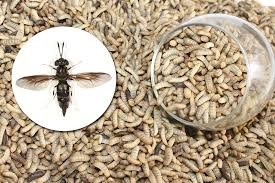
Commercial Black Soldier Fly (BSF) farming presents a modern agribusiness opportunity built around two powerful realities: rising feed costs and increasing organic waste. As poultry, fish, and pig farmers search for affordable protein alternatives, BSF larvae have emerged as a viable high-protein feed ingredient. At the same time, BSF farming converts organic waste into valuable products – protein-rich larvae, organic fertilizer (frass), and breeding stock – making it both an income-generating and waste-management solution. However, profitability depends on proper breeding management, waste sourcing consistency, hygiene control, and reliable market linkages.
This guide is designed to help aspiring and emerging agripreneurs approach Black Soldier Fly farming as a structured commercial enterprise rather than a small-scale trial project. It focuses on the practical systems that determine success – setting up breeding units, managing egg collection and larvae growth cycles, securing steady organic waste supply, controlling odour and contamination, harvesting efficiently, and identifying dependable buyers. Whether you intend to supply animal feed producers, partner with local poultry farmers, or integrate BSF into your own livestock operation, the principles shared here will help you build a disciplined, scalable venture capable of generating consistent returns.
-
1
 Getting started - Will BSF be Worth it?
Before you build a single cage or buy a single crate, you must understand the Why. Passion is good, but profit is what keeps the lights on. This step explores the massive economic gap in the African feed market. Currently, farmers are struggling because the price of traditional protein sources like omena (fishmeal) or soya is dictated by global markets and dwindling lake harvests.
We will look at how the Black Soldier Fly (Hermetia illucens) allows you to bypass these costs by using something everyone else throws away: organic waste. By the end of this section, you will understand how to calculate your Return on Investment (ROI) and why BSF is currently the most common sense business for any emerging African agripreneur.
-
2
Mastering the BSF Life Cycle (4 Critical Sections)
To run a successful BSF farm, you have to think like a "fly commander." You aren't just growing worms; you are managing a biological factory with four distinct stages. If you don't understand how the fly moves from an egg to a winged adult, your production will be inconsistent, and you will eventually run out of "seed" to keep the cycle going.
This step breaks down the ~45-day life cycle into simple, actionable stages. We will discuss what happens in each stage, how long it takes, and most importantly, when to "harvest" to ensure you get the most protein for your effort. Understanding this cycle is the difference between a hobbyist and a professional agripreneur.
-
3
Financial Projections and Scale Planning
"How much can I make?" This is the question that matters most. Many people start BSF farming in a small bucket, which is great for learning, but to make it a business, you need to understand the math of scaling. You cannot guess your way to a profit.
In this step, we will learn how to work backward: start with how much money you want to make (or how much feed you need for your own farm), and then calculate how much waste you need to source, how many crates you need, and what tools are essential. We will also look at the "hidden" costs like labor and water that many beginners forget to include in their budgets.
-
4
Biosecurity, Pest Control, and Local Regulation
Success brings company—and in BSF farming, that company usually includes rats, lizards, birds, and the "bad" houseflies. Because you are dealing with organic waste, your farm can quickly become a nuisance or a health hazard if not managed correctly. This is where most beginners fail: they treat it like a "trash pile" rather than a "food production unit."
In this step, we will discuss biosecurity—the practice of keeping the bad things out and the good things in. We will also touch on the "boring but important" side of the business: permits. To sell your feed to large-scale manufacturers, you need to meet certain standards. We will look at how to keep your farm clean, your neighbors happy, and the law on your side.

-
8
Designing the Low-Cost Larval Rearing Unit (The Nursery)
The "Nursery" is the engine room of your BSF farm. This is where the heavy lifting—the actual consumption of waste—happens. While the term "infrastructure" might sound expensive, in the African context, it is about being "street smart" with materials. You don't need a high-tech lab; you need a space that provides shade, ventilation, and a home for your larvae that they cannot crawl out of.
In this step, we will explore how to build rearing units using everything from repurposed plastic crates and timber to permanent concrete troughs. We will focus on the "Linear Layout" which allows a single worker to feed thousands of larvae without back-breaking labor. Whether you are starting in a backyard in Kumasi or a 1-acre plot in Nakuru, the principles of drainage and aeration remain the same. If your nursery is poorly designed, your larvae will "sweat," the waste will rot, and your protein yield will crash.
-
9
Building the Breeding Unit (The "Love Cage")
The breeding unit, affectionately known among farmers as the "Love Cage," is where the biology of the fly meets the engineering of the farm. This is the most sensitive part of your infrastructure. Unlike the larvae, which are hardy and eat almost anything, the adult flies are "divas." They need specific light, specific humidity, and a specific "vibe" to mate.
In this step, we will discuss how to construct a flight cage that mimics the natural environment of the African bush. We will cover the materials needed to build the frame—usually wood or PVC pipes—and the netting required to keep the flies contained. Most importantly, we will talk about the "Mating Dance." If your cage is too dark or too crowded, the flies will simply sit on the walls and wait to die without laying a single egg. This section is the heartbeat of your sustainability; master the Love Cage, and you will never have to buy "seed" again.
-
10
Climate Control for Optimal Growth
In the wild, BSF populations explode during the warm, humid rainy seasons of the tropics. As an agripreneur, your job is to make it "Rainy Season" inside your farm every single day of the year. Climate control doesn't mean expensive air conditioning; it means using basic physics to manage temperature and moisture.
This step covers the "Goldilocks Zone" for BSF: not too hot, not too cold, but just right. We will discuss how to use shade nets, water sprays, and even the "metabolic heat" generated by the larvae themselves to maintain the perfect environment. If your farm is in a hot area like Garissa or Kano, you'll learn how to cool it down. If you're in a cold area like the Nyandarua peaks, you'll learn how to trap heat. Temperature is the "accelerator pedal" of your business—control it, and you control your harvest dates.
-
11
Egg-Laying Attractant System
Imagine you have thousands of flies ready to lay eggs. If you don't give them a specific "delivery room," they will lay eggs everywhere—in the waste, on the netting, in the corners. This makes it impossible to collect the eggs for the nursery. The "Attractant System" is how we trick the fly into laying all its eggs in one neat, tidy spot that we can easily harvest.
This step explains the "Eggie" design—the small wooden blocks or corrugated cardboard pieces where eggs are deposited. We will also talk about the "Bait"—the smelly, fermenting waste that tells the mother fly: "This is a safe place for your babies to eat." Getting this right is a fine art. If the bait is too far from the eggies, she won't find them. If it’s too close, the eggs will get wet and rot.
-
15
Sourcing and Categorizing Local Waste Streams
In BSF farming, "substrate" is just a professional word for "larva food." Unlike traditional livestock where you buy expensive bags of pre-mixed feed, the BSF agripreneur is a scavenger, a negotiator, and a chef. The biggest advantage of BSF is their ability to eat almost any organic matter, but as a business person, you must understand that not all waste is created equal. If you feed your larvae only cardboard, they will be skinny and slow; if you feed them only meat scraps, your farm will smell and attract neighborhood dogs.
In this step, we will learn how to identify, categorize, and secure reliable "waste streams" in your local area. We will look at how to build relationships with market chairmen, hotel managers, and brewery owners to ensure you have a constant supply of food. Reliability is the backbone of your operations—if your waste supply stops for three days, your "biological factory" starts to starve, and your profits vanish. We will categorize waste into "High Energy," "High Protein," and "Bulking Agents" so you can create a balanced diet for your larvae.
-
16
Substrate Pre-Treatment and Preparation
You cannot just dump a whole watermelon or a bag of dry maize cobs into a BSF bin and expect results. The BSF larva has no teeth; it uses hook-like mouthparts and "spits" enzymes onto its food to dissolve it into a liquid "soup" which it then slurps up. If the food is too hard or the pieces are too big, the larva spends all its energy trying to break it down instead of growing.
This step covers Pre-Treatment, the process of making waste "palatable." We will discuss "Maceration" (grinding) and "Fermentation." Think of this as "pre-digesting" the food for your larvae. By spending a little time and effort on preparation, you can reduce the larval growth cycle from 21 days down to 14 days. That is a $33%$ increase in your annual production capacity without adding a single extra crate.
-
17
Calculating Feed Ratios (C:N and Moisture)
BSF farming is a science. If you give the larvae only "energy" (sugar/carbs), they will be fat but low in protein. If you give them only "nitrogen" (protein/manure), the bin will produce too much ammonia, smell terrible, and potentially turn toxic. To maximize your profit, you need to understand the C:N Ratio (Carbon to Nitrogen) and the Moisture Content.
This is the most technical part of the guide, but we will keep it simple. Think of Carbon as the "fuel" (energy) and Nitrogen as the "bricks" (muscle/protein). In this step, we will learn how to balance these two using common African waste materials. We will also master the "Squeeze Test"—the most important skill for any BSF farmer—to ensure your moisture is exactly at the $70%$ mark.
-
18
Feeding Techniques for FCR Optimization
Feeding BSF is not just about what you feed, but how you feed. If you give them all their food on Day 1, the food will rot and ferment into a "soup" before the tiny larvae can eat it. If you feed them too little, they will spend all their energy crawling around looking for food instead of getting fat. This is where we talk about the Feed Conversion Ratio (FCR)—how many kilos of waste it takes to make one kilo of larvae.
In this step, we will discuss the "Layering Technique." We will learn how to judge the hunger of your larvae by looking at the surface of the bin. We will also tackle the common dilemma of "Overfeeding vs. Underfeeding." A professional agripreneur knows that the goal is to have "Zero Waste" at the end of the cycle—meaning the larvae have eaten every single bit of food, leaving only dry, crumbly fertilizer (Frass).
-
19
Egg Harvest and Incubation Management
The transition from a cluster of eggs to thousands of hungry larvae is the most delicate moment in the BSF life cycle. Eggs are tiny, stationary, and vulnerable to drying out or being eaten by predators. If you fail at this stage, your "production line" stops before it even starts. Many beginners make the mistake of placing eggs directly onto a large pile of waste, where the tiny hatchlings (called "neonates") get lost, drown, or starve because they can’t find the food.
In this step, we will master the art of "Incubation." We will discuss how to safely remove the egg masses from your cardboard or wooden "Eggies" and place them in a controlled environment. We’ll look at the "Hatching Station" setup—a small-scale system that ensures nearly $100%$ of your eggs turn into healthy larvae. This is where you learn to be a "nanny" to your flies, providing the perfect balance of humidity and "baby food" to give your next generation the best possible start.
-
20
Nursery Rearing and Transition to Bulk Feed
The first seven days of a BSF larva's life are its "growth spurt" phase. At this stage, they are too small to handle the tough, fibrous waste you might get from a market. If you move them to the big rearing troughs too early, they may struggle to compete with the sheer volume of waste, or the heat from the large-scale fermentation might overwhelm them. This step is about the "Transition"—moving your "toddler" larvae from the nursery boxes to the commercial bulk feeding bins.
We will discuss the "5-Day Rule," where larvae are kept in high-nutrient "starter" feed before being introduced to "workforce" waste. This ensures they have the strength and size to handle anything you throw at them. We will also cover how to calculate when a batch is ready to be moved, ensuring you maintain a "Continuous Flow" system where you are harvesting one bin while the next one is just starting.
-
21
The Auto-Harvest System (Prepupae Collection)
In traditional farming, harvesting is the most labor-intensive part. You have to pick coffee berries one by one or catch chickens by hand. In BSF farming, we use "Biology" to do the work for us. When a BSF larva reaches the end of its growth stage, it enters the "Prepupa" stage. Its mouthparts change into a hook, it turns dark brown/black, and it develops an irresistible urge to leave the wet, dirty waste and find a dry, dark place to pupate (turn into a fly).
This step explores the "Auto-Harvest" or "Self-Harvesting" system. By building a simple ramp at the edge of your rearing trough, you can trick the prepupae into marching themselves right into a collection bucket. This saves you hours of manual sifting and ensures your final product is "clean" and free of waste. We will discuss the correct angle for the ramp and how to design "traps" that prevent the larvae from escaping back into the farm.
-
22
Broodstock Selection and Replacement
A common trap for new agripreneurs is the "Harvest Crash." This happens when you get so excited about selling your larvae that you sell everything, leaving no one to lay the next generation of eggs. Your BSF farm is a "closed loop," and you must be disciplined about maintaining your "Broodstock"—the elite group of larvae destined to become the parents of your future profits.
In this step, we will discuss how to select the best "seed" for your farm. Just like a maize farmer keeps the best cobs for planting, a BSF farmer keeps the largest, darkest, and most active prepupae. We will cover the "Replacement Ratio" and how to manage the "Pupa Pit"—the quiet space where your prepupae transform into flies. Mastering this ensures your farm never runs out of "inventory" and helps you "breed" a stronger, more productive fly over time.
-
23
Post-Harvest Cleaning and Preparation
You have successfully grown a massive crop of larvae, but before you can sell them, you must remember one thing: you are now a "Food Producer." Whether these larvae are going to a fish pond or a commercial feed mill, quality control starts the moment they leave the rearing bin. Harvested larvae are often covered in "Frass" (waste), sticky substrate, and bacteria from the decomposition process. If you pack them while they are dirty, they will rot quickly, smell terrible, and potentially carry pathogens that could harm the animals eating them.
In this step, we will discuss the "Purging and Cleaning" protocol. This is the process of ensuring your final product is "clean enough to eat." We will cover how to use water baths to rinse the larvae and the "Gut Emptying" technique which ensures the larvae have no undigested waste inside them. This step is what separates a professional agripreneur from a backyard hobbyist. Clean larvae have a higher market value, a longer shelf life, and build trust with your customers.
-
24
Drying and Processing BSF Meal
While selling live larvae is great for local neighbors, the real "Big Money" in African agribusiness is in BSF Meal. Live larvae are $70%$ water, which makes them heavy to transport and prone to rotting. By drying them and grinding them into a fine flour (meal), you create a shelf-stable product that can be stored for 6 months, easily mixed into commercial feed rations, and shipped across borders.
In this step, we will explore low-cost and high-efficiency drying techniques. We will look at "Solar Drying," which is perfect for our sunny African climate, and "Oven/Kiln Drying" for those who want to produce tons of meal regardless of the weather. We will also discuss the "Grinding" process—turning the dried "crunchy" larvae into a professional-grade powder. Mastering this step allows you to compete directly with imported soya and fishmeal.
-
25
By-Product Profit: Oil and Frass
One of the biggest secrets of BSF farming is that the "larvae" aren't your only product. A truly savvy agripreneur extracts every cent of value from the cycle. When you process BSF, you get two incredibly valuable by-products: BSF Oil and Frass (Fertilizer). In many cases, the sale of these two items can cover all your operating costs (labor, water, transport), making the protein meal pure "gravy" (net profit).
In this step, we will learn how to extract BSF oil—a high-energy supplement for pig and poultry feed that is also used in the cosmetic industry for soaps and lotions. We will also discuss the "Black Gold"—the Frass. This isn't just "manure"; it is a micro-be-rich soil conditioner that can double the yield of local kale (sukuma wiki) or maize crops. We will look at how to package and brand these "extras" to reach different types of customers.
-
26
Market Strategy: Targeted Sales
You have the product; now you need the profit. The biggest mistake African agripreneurs make is producing something without knowing exactly who will buy it. In the BSF world, your customers range from the "Mama Kuku" (local poultry lady) with 10 chickens to the multi-million dollar commercial fish farm or the international animal feed manufacturer.
In this final step, we will build your "Market Roadmap." We will discuss how to price your products, how to pitch to different types of buyers, and how to secure long-term contracts. We will also look at the "Social Proof" strategy—using your own small demonstration flock to show customers that BSF-fed animals grow faster, healthier, and cheaper. This is where you move from being a "farmer" to being a "business leader."